
Kingdom of Ka
Introduction
Section titled “Introduction”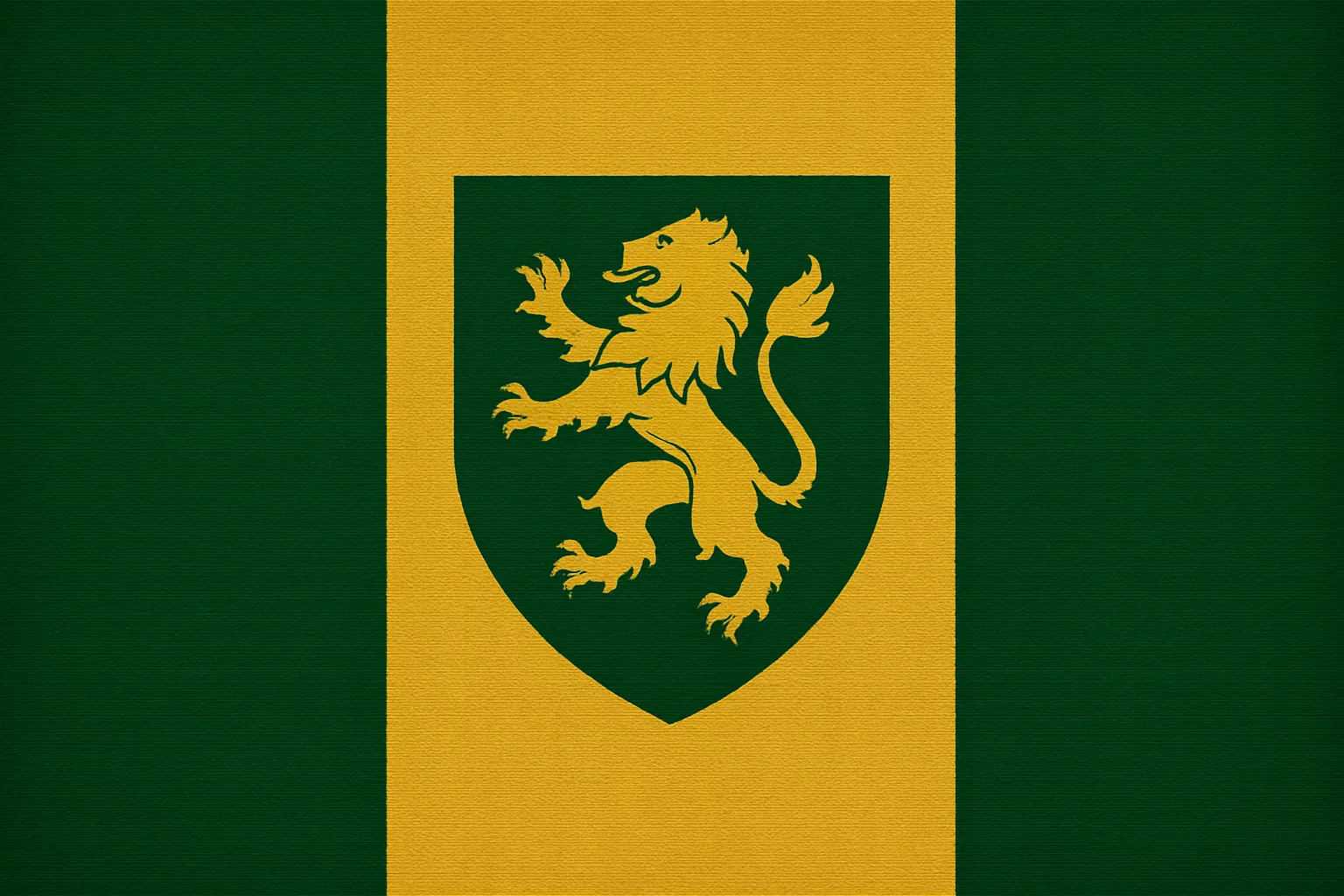 (Flag of Ka)
The Kingdom of Ka is a sovereign nation on the eastern continent of Droskarin, known historically as the former region of Bolborkia, homeland of the human Bolborkian tribes. Once conquered and absorbed by [[the-erulian-empire]] in 74 A.H. under Emperor Talios I, the region later broke away and reestablished independence in 516 A.H. following a successful uprising led by Joriel I. The nation was renamed the Kingdom of Ka by its most recent monarch, King Marek I, after himself and the capital city. Following Marek’s death, the kingdom is currently governed by a ruling council, awaiting the emergence of a legitimate heir.
At a Glance
Section titled “At a Glance”| Category | Information |
|---|---|
| Capital City | Ka |
| Languages | Erulian (official), Bolborkian (near-extinct), Common |
| Currency | Hexic Crown (ɌH) |
| Calendar | Erulian Calendar |
| Existence as a Kingdom | Over 100 years |
| Religion | Predominantly atheist; minority Hexadem adherents |
| World Population | ~1.42 billion |
| Population of Ka | ”Bolborkian” or “Kaian” ~198 million (~14% of global population) |
| Size | 8.4 million km² |
| System of Rule | Council governance (no current monarch) |
| Law Enforcement | Court-based judicial system |
| Military Ranking | #4 globally |
| Wealth Ranking | #5 globally |
Origins and Foundations
Section titled “Origins and Foundations”Pre-Imperial Era (Bolborkia)
Section titled “Pre-Imperial Era (Bolborkia)”The region now known as Ka was originally inhabited by the Bolborkians, a human tribal group culturally distinct from the Erulians. Historical records indicate longstanding hostility and competition between the two peoples.
Imperial Conquest (74 A.H.)
Section titled “Imperial Conquest (74 A.H.)”In 74 A.H., Emperor Talios I invaded Bolborkia, defeating local resistance and incorporating the territory into the expanding Erulian Empire. For centuries the region remained under direct imperial rule, though local identity persisted.
Restoration of Independence (516 A.H.)
Section titled “Restoration of Independence (516 A.H.)”The first King of Bolborkia, Joriel I, led a full-scale rebellion against imperial authority. After a four-week siege of the capital city, Ka, the empire was expelled and the region regained independence.
Renaming to Kingdom of Ka
Section titled “Renaming to Kingdom of Ka”Under the later rule of King Marek I, the nation was renamed the Kingdom of Ka, honoring both the capital and his personal legacy.
Geography/Borders
Section titled “Geography/Borders”The Kingdom of Ka borders:
| Neighboring Region | Direction |
|---|---|
| Kelar | South |
| Erulian Empire | East |
| Permatesh | North |
| Shersian Channel | West |
Its position grants it strategic maritime access toward the Western Continent and Sershia region. The country also holds many geological wonders within and along it’s borders.
River Theras
Section titled “River Theras”One of the largest rivers in the world, cutting across nearly the entire nation from north to south, forming major trade routes and agricultural basins.
River Ka
Section titled “River Ka”Runs directly through the capital city, shaping the urban structure and serving as a historical point of conflict during both the siege of 516 A.H. and earlier imperial campaigns.
Sand Moore Desert
Section titled “Sand Moore Desert”A subsection of the Erulian Desert located within Ka territory, known for migratory giant worm species, making it one of the most dangerous regions on Omain.
Dead Man’s Lake
Section titled “Dead Man’s Lake”Shared territorial control with the Erulian Empire. The site is heavily scarred by centuries of military conflict.
Cavehide Cavern
Section titled “Cavehide Cavern”The deepest known cave system in the overworld, located in southern Ka. Estimated depth: 9.4 km, connecting partially to fissures believed to lead toward the Underdark.
Politics & Factions
Section titled “Politics & Factions”1. System of Government
Section titled “1. System of Government”The Kingdom of Ka traditionally functions as an absolute hereditary monarchy, with rulership passed through direct bloodline descent from House Flamebrand, the royal house tracing lineage to Joriel I, founder of the kingdom. Monarchs historically held supreme authority over military, law, foreign policy, and cultural doctrine.
Following the death of King Marek I, the realm has entered an interregnum period due to the absence of a confirmed heir. With no proven direct successor from House Flamebrand, royal authority was temporarily transferred to a governing council composed of senior military leaders loyal to the late king.
The kingdom is currently administered by the Council of Eight, who collectively wield executive authority until a legitimate monarch is recognized.
2. The Council of Eight (Current Government)
Section titled “2. The Council of Eight (Current Government)”The Council of Eight consists of former high-ranking generals and officers who served under King Marek I. They hold equal voting power, and decisions require a majority ruling.
| Title | Role | Notes |
|---|---|---|
| High Marshal Regent | Chair of council sessions; oversees military policy | Initially appointed by Marek I |
| Master of Shields | Oversees homeland defense and border fortresses | Strong anti-Empire stance |
| Lord of Rivers | Controls trade routes along Rivers Ka and Theras | Economic authority |
| Adjudicator of Law | Oversees courts, legal structure, civil authority | Advocates return to monarchy |
| Commander of the Sandwatch | Controls Sand Moore Desert patrols | Handles strategic threat zones |
| Warden of the Northern Frontier | Oversees relations with Permatesh | Neutral foreign policy |
| Keeper of the Flamebrand Archives | Custodian of royal records and bloodline claims | Key role in choosing successor |
| Sea-Lance Admiral | Oversees naval forces and western maritime diplomacy | Expansionist faction |
Not all council members support reinstating the monarchy; political division is increasing.
3. Succession and Legitimacy
Section titled “3. Succession and Legitimacy”Royal succession is based on direct blood relation to House Flamebrand, validated by:
- genealogical proof
- archival documentation
- ceremonial approval by royal clergy
However, disputed bloodlines, incomplete records, and internal political interests have stalled coronation efforts. Several noble houses claim distant ties to the Flamebrand line, contributing to political instability.
Until a successor is named, the Council of Eight holds collective sovereignty.
4. Internal Political Factions
Section titled “4. Internal Political Factions”| Faction | Goal | Support Base |
|---|---|---|
| Royalists | Restore absolute monarchy under a legitimate Flamebrand heir | Clergy, old nobility, rural populations |
| Councilists | Make the council a permanent ruling body | Military elite, bureaucrats |
| Reconstructionists | Reform Ka into a constitutional monarchy or republic | Merchants, scholars, some youth |
| Isolationists | Withdraw from foreign conflicts and rebuild economy | Border towns, desert communities |
| Expansionists | Strengthen navy & challenge Empire influence | Western coastal regions |
Current balance of power is fragile, and a succession crisis may lead to internal conflict if unresolved.
5. External Political Position
Section titled “5. External Political Position”Despite internal instability, Ka retains significant strategic power due to control of major rivers and access to the Shersian Channel. The kingdom is currently:
- Suspicious toward the Erulian Empire due to historic occupation
- Neutral toward Permatesh and Kelar
- Increasingly interested in western maritime expansion
- Economically weakened due to lack of centralized leadership
Diplomatic relations are maintained by the Council’s Sea-Lance Admiral rather than a monarch.
6. Summary
Section titled “6. Summary”The Kingdom of Ka remains a politically fractured state in transition. While it has reached the largest territorial extent in its history, the absence of a monarch has created competing visions for the nation’s future. Resolution of the succession crisis will determine whether Ka continues as a military council-state, restores royal authority, or reforms into a new political system altogether.
Culture
Section titled “Culture”The culture of the Kingdom of Ka is a blended product of ancient Bolborkian heritage and centuries of Erulian imperial influence. Originally formed from the Bolborkian human tribes, Ka has since evolved into a multicultural society shaped by conquest, resistance, migration, and cultural fusion. Modern Ka identity reflects a complex balance between indigenous tradition, Erulian administrative legacy, and diverse post-independence cultural developments.
Although the original Bolborkian race has become scarce due to generations of intermarriage and assimilation across ethnic groups, elements of their language, symbolism, and spiritual customs persist in contemporary cultural practices.
1. Social Identity and Ethnic Composition
Section titled “1. Social Identity and Ethnic Composition”Ka’s population consists of a mixture of:
- descendants of indigenous Bolborkians
- citizens of partial or full Erulian ancestry
- migrants from neighboring Droskarin nations
- smaller communities from Virelya and the Shersian isles
Most citizens today identify as Kaian rather than strictly by lineage, reflecting a national culture forged through resistance to conquest rather than ethnic homogeneity.
Cultural identity emphasizes:
- pride in independence
- communal tradition over imperial hierarchy
- heritage through shared land rather than bloodline
The remnants of Bolborkian ethnicity are most concentrated in southern and river-valley regions.
2. Language and Naming Traditions
Section titled “2. Language and Naming Traditions”Ka uses two primary languages:
- Erulian (administrative, legal, and military)
- Common (used in trade and mixed regions)
The Bolborkian language survives in fragments—ritual phrases, family names, river and desert terminology—but is considered nearly extinct as a spoken tongue.
Naming conventions often combine Erulian structural forms with older tribal roots:
- Marek Val-Tharos
- Kaela Jor-Naesh
- Dalen of the Theras Basin
Many traditional names reference land features rather than ancestral houses.
3. Religion and Spiritual Beliefs
Section titled “3. Religion and Spiritual Beliefs”Ka historically practiced indigenous Bolborkian animistic traditions, emphasizing spirits of rivers, sand, wind, and stone. After Erulian conquest, the Hexadem became the dominant faith through forced conversion and cultural assimilation.
In the modern era:
- Hexadem remains influential, especially in urban and noble circles
- a large portion of the population is secular or atheist, identifying resistance to organized religion as a cultural stance
- ancestral, land-based folk rites persist in rural regions, often disguised as cultural festivals
Religion in Ka is less rigidly doctrinal than in Erule, reflecting its history of resistance and syncretism rather than devotion.
4. Art, Expression & Architecture
Section titled “4. Art, Expression & Architecture”Ka’s artistic culture is known for vivid, communal, and celebratory styles:
- colorful civic murals depicting liberation from the Empire
- mosaic stonework influenced by Bolborkian desert geometry
- large public plazas for festivals and speeches
- riverfront architecture incorporating terraces, arches, and broad courtyards
Buildings often combine Erulian imperial stonework with local desert-adapted designs such as:
- shaded patios
- carved sandstone façades
- cloth canopy roofing in market districts
Art favors themes of independence, memory, and defiance.
5. Food and Daily Life
Section titled “5. Food and Daily Life”Kaian cuisine blends agricultural river-valley food with desert-adapted ingredients:
Common elements include:
- stews and roasted meats seasoned with sharp, earthy spices
- flatbreads and corn-based starches
- fruit-based fermented drinks
- river fish prepared with aromatic herbs
- spiced ground grains carried by desert caravans
Meals are deeply communal and often tied to festivals, military celebrations, or remembrance rituals.
6. Music, Festivals, and Celebration
Section titled “6. Music, Festivals, and Celebration”Cultural gatherings are frequent and loud, often involving:
- rhythmic percussion
- wind instruments fashioned from reeds and bone
- war chants adapted into ceremonial music
- fire-dances rooted in Bolborkian independence lore
Major celebrations revolve around:
- Anniversary of Liberation (516 A.H.)
- River-Flood Festivals
- Commemoration of Joriel I
- Sandwalker Night, honoring travelers lost in the Sand Moore Desert
Events tend to focus on national identity, shared history, and honoring the dead rather than religious exaltation.
7. Social Values
Section titled “7. Social Values”Kaian culture places emphasis on:
- self-determination over obedience
- community bonds over hierarchy
- resilience and perseverance
- pride in ancestral struggle
- valor independent of divine mandate
Unlike Erulian culture, where glory is tied to divine purpose, Ka associates honor with freedom, endurance, and survival.
8. Cultural Tension
Section titled “8. Cultural Tension”Because Ka is a multicultural, post-occupation society, several cultural conflicts persist:
| Issue | Cultural Impact |
|---|---|
| Erulian legacy | Language dominance and elite culture seen as both oppressive and foundational |
| Identity fragmentation | Debate between restoring Bolborkian heritage vs embracing mixed identity |
| Secularism vs Hexadem | Religious institutions remain powerful but face widespread skepticism |
| Class differences | Council and military elites preserve Erulian elite traditions |
These tensions shape politics, identity movements, and succession debates.
Summary
Section titled “Summary”Kaian culture is defined by its origins as a conquered people, its reclamation of independence, and its continued blending of ancestral Bolborkian traditions with Erulian influence. It is vibrant, diverse, and communal, grounded in land, history, and resilience rather than faith or hierarchy.
Laws & Taboos
Section titled “Laws & Taboos”The legal system of the Kingdom of Ka is heavily influenced by Erulian judicial structure due to centuries of imperial rule, but diverges sharply in philosophy, implementation, and cultural values. Unlike the Erulian Empire, Ka rejects religious authority as a basis for law; legislation is secular and rooted in principles of civil welfare, personal autonomy, and communal stability.
Kaian law prioritizes fair trial procedures, civic rights, and prevention of harm rather than ideological enforcement.
1. Foundations of Law
Section titled “1. Foundations of Law”The legal system is built upon three core principles:
| Principle | Description |
|---|---|
| Secular Governance | No religious body has legal authority; spiritual belief is private unless harmful. |
| Protection of Person & Family | Laws focus on preventing physical, economic, and social harm to individuals or family units. |
| Justice Through Due Process | Every accused individual is entitled to legal defense, trial, and impartial judgment. |
Unlike Erule, religion, doctrine, and divine authority play no role in lawmaking.
2. Structure of the Legal System
Section titled “2. Structure of the Legal System”| Institution | Function |
|---|---|
| High Court of Ka | Supreme secular court handling major crimes and national disputes. |
| Regional Courts | Govern provincial law and inter-city disputes. |
| City & River Courts | Manage civil cases, trade conflicts, and local crime. |
| Judicial Guard | Law enforcement body separate from the military. |
Military courts exist, but only apply to soldiers during wartime—not civilians.
3. Crime Classification
Section titled “3. Crime Classification”Ka uses three legal categories:
A. Crimes Against Persons
Section titled “A. Crimes Against Persons”- murder
- assault
- forced labor/enslavement
- kidnapping
- family harm & domestic abuse (treated as severe offense)
Punishments: prison, exile, forced restitution, in extreme cases execution.
B. Crimes Against Property & Order
Section titled “B. Crimes Against Property & Order”- theft
- arson
- fraud
- smuggling
- unlawful seizure of land
- destruction of irrigation systems or river infrastructure
Punishments: fines, restitution, labor sentences, imprisonment.
C. Crimes Against the State
Section titled “C. Crimes Against the State”- treason
- coordinated rebellions
- espionage for foreign powers
- intentional incitement of civil collapse
- aiding external invasions
Punishments: long-term imprisonment, exile, or execution (rare).
4. Religious and Moral Crimes
Section titled “4. Religious and Moral Crimes”Unlike the Erulian Empire, there are no religious crimes. Citizens may:
- worship any deity
- worship no deity
- practice ancestral rites
- form independent cults or sects
A religious act becomes illegal only when it:
- harms a person
- destroys property
- coerces others into participation
- disrupts public order or family structure
Thus, heresy, blasphemy, and apostasy have no legal standing.
This position is rooted in Ka’s historical rejection of forced imperial religion.
5. Punishment System
Section titled “5. Punishment System”Kaian punishment emphasizes civil resolution over fear or spectacle.
| Method | Usage |
|---|---|
| Restitution | Most civil crimes; offenders repay losses. |
| Imprisonment | Standard penalty for violent or repeated offenses. |
| Labor Sentences | Used for property crimes; repairing public works. |
| Exile | Rare alternative to imprisonment for ideological offenders. |
| Execution | Last resort, only for extreme treason or serial murder. |
Execution Protocols
Section titled “Execution Protocols”- Never conducted publicly
- Performed within prisons
- Requires unanimous approval of a judicial panel
This reflects cultural distaste for state-sanctioned intimidation.
6. Legal Rights
Section titled “6. Legal Rights”All residents of Ka—citizens or foreigners—are guaranteed:
- legal representation
- right to trial
- right to appeal
- right to refuse confession under coercion
Nobility does not receive reduced sentences as in the Empire.
7. Social Taboos
Section titled “7. Social Taboos”Kaian society enforces a set of non-legal cultural taboos stemming from ancestral values, communal cohesion, and historical trauma.
| Taboo | Cultural Reason |
|---|---|
| Public worship of Erulian gods | Associated with conquest and forced assimilation. |
| Burning of river offerings | Seen as disrespect to ancestral waterways. |
| Mocking the dead or war victims | Cultural identity built on memory and loss. |
| Dishonoring one’s household publicly | Family reputation is a core social pillar. |
| Sand Moore desecration | Region seen as sacred and deadly; travelers are honored, not mocked. |
Taboos are enforced socially rather than legally, and breaking them harms reputation rather than invoking punishment.
8. Cultural Comparison to Imperial Law (Summary)
Section titled “8. Cultural Comparison to Imperial Law (Summary)”| Aspect | Kingdom of Ka | Erulian Empire |
|---|---|---|
| Basis of Law | Secular, civic | Religious, divine mandate |
| Executions | Rare, private | Common, public |
| Religious Crimes | None | Central to judicial system |
| Social Identity | Freedom & memory | Honor & divine purpose |
| Justice Goal | Stability & fairness | Control & righteous order |
Ka’s laws evolved as a direct ideological rejection of imperial rule.
Timeline
Section titled “Timeline”Wars, tensions, treaties, crises, or events the party could get dragged into.
Military system
Section titled “Military system”The military of the Kingdom of Ka is a feudal, decentralized force composed of warrior-led battalions, naval fleets, and regional regiments commanded by noble houses rather than a unified religious hierarchy. Unlike the Erulian Empire’s theological military doctrine, Kaian warfare prioritizes territorial defense, naval supremacy, and regional autonomy.
Originally formed from Bolborkian tribal warbands, the military structure retains heroic lineage, honor-based leadership, and loose organizational chains rooted in battlefield capability rather than formal rank.
1. Structure and Philosophy
Section titled “1. Structure and Philosophy”Ka does not use standardized military ranks. Instead, the army operates through a traditional hierarchy of authority based on lineage, battlefield merit, and regional leadership.
| Level | Description | Equivalent Concept |
|---|---|---|
| Monarch (or Council) | Supreme commander of all military forces | Head of state |
| Lords | Commanders of regional regiments; rule troops from their own lands | Feudal generals |
| Harias (“Heroes”) | Elite warriors commanding battalions | Champion-commanders |
| Cells | Small tactical units led by a chosen veteran | Squad-level units |
Authority flows downward through loyalty rather than institutional rank.
When no monarch sits on the throne (as in the current interregnum), the Council of Eight collectively commands the military, though naval power is disproportionately controlled by coastal council members, causing internal imbalance.
2. Army Composition
Section titled “2. Army Composition”Ka’s land forces are organized through a regiment → battalion → cell structure.
Regiments
Section titled “Regiments”- Raised by noble houses
- Region-based rather than specialized
- Size varies widely (8,000–40,000 troops each)
Battalions
Section titled “Battalions”- Commanded by Harias
- Typically 600–1,200 soldiers
- Composed of mixed infantry, cavalry, bowmen, and skirmishers
- 8–15 fighters
- Led by an experienced warrior selected by the Harias
- Operate independently in skirmishes or reinforce main formations
This system results in highly flexible, mobile warfare suited to defensive campaigns, river-based logistics, and harsh desert environments.
Support Corps
Section titled “Support Corps”While not ranked formally, dedicated groups exist for:
- Logistics caravans
- Siege engineers
- Armorers and weaponsmiths
- Field medics
- Mapmakers and scouts
These parallel the Empire’s Oghma and Tetford roles, but without religious doctrine.
3. Military Size
Section titled “3. Military Size”| Category | Personnel |
|---|---|
| Standing Army | ~720,000 |
| Reservist Forces | ~1.1 million |
| Auxiliary & Support Personnel | ~270,000 |
| Total Mobilizable Force | ~2.1 million troops |
Ka’s army is smaller than the Erulian military but heavily reinforced by naval dominance and geographical defense advantages.
4. Naval Forces (Primary Strength)
Section titled “4. Naval Forces (Primary Strength)”Ka possesses the largest naval force in the world, owing to its strategic position along the Shersian Channel. The navy serves as both defense and international projection of power.
Fleet Size
Section titled “Fleet Size”| Type of Vessel | Approx. Count | Purpose |
|---|---|---|
| Heavy Warships | ~280 | Line combat, sieges, naval dominance |
| Medium Warships | ~1,100 | Escort, patrol, mid-range combat |
| Light Patrol & Transport Ships | ~2,020 | Scouting, trade protection, troop movement |
| Total Ships | ~3,400 | Largest navy globally |
The navy is responsible for preventing invasions from the west and controlling key waterways between continents.
5. Naval Hierarchy
Section titled “5. Naval Hierarchy”Unlike the army, the Kaian navy does employ formal ranking due to coordination demands.
| Rank | Role |
|---|---|
| High Admiral of Ka | Supreme naval commander (currently council-appointed) |
| Sea-Lance Admirals | Command entire oceanic regions or major fleets |
| Fleet-Captains | Command squadrons of ships (5–20 vessels) |
| Shipmaster | Captain of a single vessel |
| Deck-Officers | Senior crew overseeing navigation, weapons, or logistics |
| Crewmen | General sailors and marines |
Naval forces are professional and merit-based rather than familial.
6. Strategic Advantages
Section titled “6. Strategic Advantages”Ka’s military strength derives from:
- Natural maritime positioning
- Fleet dominance securing trade routes
- Flexible decentralized command
- Deep cultural experience fighting deserts, rivers, and coasts
- Defense-first doctrine making conquest difficult
Invasion of Ka by land is improbable without naval superiority.
7. Weaknesses
Section titled “7. Weaknesses”Despite a powerful navy, Ka’s army suffers from:
- lack of centralized command during monarchless periods
- inconsistent training standards across noble regiments
- logistical strain during prolonged inland campaigns
- mistrust between regional forces
If succession remains unresolved, these weaknesses may deepen.
Summary
Section titled “Summary”The military of the Kingdom of Ka is a hybrid between heroic tribal warfare and feudal organization, backed by the largest navy in the world and positioned to dominate maritime routes. While Ka boasts unmatched strategic naval power, its land forces rely heavily on charismatic leaders rather than unified national command, leaving the kingdom strong at sea but potentially fractured on land.
Notable figures
Section titled “Notable figures”Great people of the country.