
Erulian(Race)
Overview
Section titled “Overview”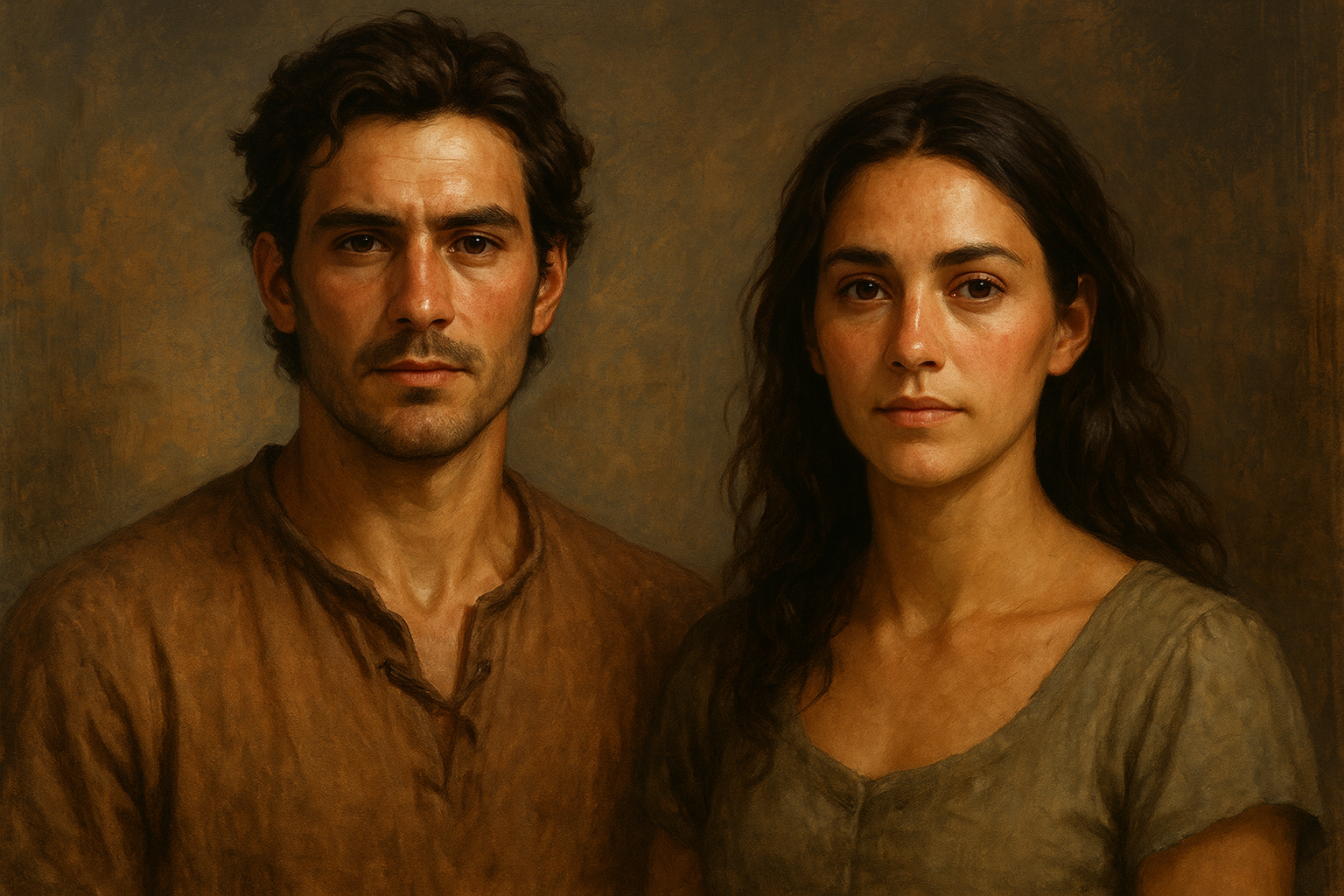 (Erulian Male and Erulian Female Side By Side)
The Erulian race is a prominent human subrace native to the northwestern plains of Droskarin, specifically the region surrounding the ancient heartland of Erule. They developed as an adaptive offshoot of the early human populations of Omain, shaped by the climate, terrain, and cultural pressures of the early Erulian homeland.
Today, Erulians are one of the most widespread human lineages in Omain. Due to centuries of imperial expansion, colonization, migration, and intermarriage, Erulian ancestry is found across nearly every human population on the planet.
The Erulian Empire’s long history has ensured that Erulian features, cultural practices, and bloodlines appear from Virelya to the Shersian Archipelago—making them one of the most globally influential human subraces.
Origins and Early Development
Section titled “Origins and Early Development”The Erulian race traces its roots to the ancient humans of Droskarin, the earliest settled populations during the Greater Era of Population. These ancestral humans spoke Old Orisian, lived in scattered clans, and eventually diverged through migration.
The tribes that wandered northwest toward what would become the Erulian Plains underwent several key adaptations:
Environmental Pressures
Section titled “Environmental Pressures”-
Warm climates in summer and harsh winds in colder seasons forced the development of balanced pigmentation.
-
Open plains and wide horizons fostered a lifestyle of farming, horse rearing, and settlement building.
-
Coastal humidity near the Terra Fina Channel contributed to robust lung capacity and endurance.
Social Pressures
Section titled “Social Pressures”-
Early Erulians lived in clustered settlements but regularly interacted with nomads, shaping their adaptability, language complexity, and organized social structure.
-
Their ancestor societies placed heavy value on craftsmanship, honor, and communal responsibility, traits still recognizable today in Erulian culture.
By the time King Calados I unified the region during Year 0 A.H., the Erulian race had crystallized into a distinct human lineage.
Physical Characteristics
Section titled “Physical Characteristics”Erulians maintain several characteristic traits shaped by their ancestral homeland:
Skin Tone
Section titled “Skin Tone”-
Generally light-skinned, but tan easily under sun exposure.
-
This derives from the need to withstand the intense summer heat of the plains while still thriving in cooler months.
-
Naturally dark: brown, deep chestnut, or black are the most common.
-
Occasionally lighter shades appear through generational mixing.
Eye Color
Section titled “Eye Color”-
Predominantly hazel, brown, or green.
-
Blue eyes are rare but more common in regions closer to northern migrant groups.
-
Medium height on average.
-
Tend to be lean but strong, a result of historically agricultural and martial traditions.
Facial Structure
Section titled “Facial Structure”-
Defined cheekbones, straight or slightly curved noses, and expressive brows.
-
Warm facial complexion that deepens easily in sunlight.
Cultural Traits and Identity
Section titled “Cultural Traits and Identity”Erulian identity is tied to:
-
Imperial legacy
-
Hexademic faith
-
Community and tradition
-
Scholarship and structured society
Because the Erulian Empire dominated three continents for centuries, the race’s cultural markers—language, customs, and aesthetics—spread quickly and rooted firmly across Omain.
Adaptations to the Erulian Plains
Section titled “Adaptations to the Erulian Plains”The Erulian Plains are a region of:
-
Hot summers
-
Wind-heavy winters
-
Long stretches of fertile grassland
-
Seasonal storms from the Terra Fina Channel
Erulians adapted in several ways:
1. Pigmentation Flexibility
Section titled “1. Pigmentation Flexibility”Their skin reflects a balance between protection from summer sun and efficiency in capturing sunlight during colder months—resulting in a complexion that tans quickly without burning easily.
2. Heat Endurance
Section titled “2. Heat Endurance”Generations on the plains developed:
-
Strong cardiovascular stamina
-
High tolerance for heat
-
Ability to work long hours outdoors, especially during harvest seasons
3. Respiratory Adaptation
Section titled “3. Respiratory Adaptation”The humid coastal winds strengthened:
-
Lung capacity
-
Breath control
-
Endurance during physical tasks
These traits made Erulians well-suited for early military and agricultural development.
4. Social Cohesion
Section titled “4. Social Cohesion”Their environment encouraged:
-
Permanent settlements
-
Cooperative defense
-
Early political organization
This is one reason Erulians were the first to form a cohesive kingdom—and later an empire.
Modern Distribution
Section titled “Modern Distribution”Due to the Erulian Empire’s historical reach, Erulian bloodlines are widespread.
High Concentration Regions
Section titled “High Concentration Regions”-
Erulian Empire (core provinces)
-
Kingdom of Ka
-
Uxbrid
-
Helskirk
-
Shersia
Moderate Presence
Section titled “Moderate Presence”-
Thaxted
-
Hatland
-
Permatesh
-
Garenia
Low but Present
Section titled “Low but Present”-
Virelya (outer regions)
-
Certain parts of Chilborkia
-
Kelar (mostly through migration, as dragons rarely intermix genetically)
Global Percentage
Section titled “Global Percentage”Approximately 55–60% of all humans in Omain carry at least partial Erulian ancestry, and about 35% can be classified as primarily Erulian ethnicity.
Relationship to Other Human Subraces
Section titled “Relationship to Other Human Subraces”Due to centuries of interaction, Erulians influenced or intermixed with:
-
Bolborkians in Ka
-
Uxbridian coastal humans
-
Permateshian forest people
-
Helskirk mountain-dwelling humans
This mixing created a human “web of ancestry” where pure traits are rare outside isolated pockets.
Cultural Influence
Section titled “Cultural Influence”Erulians introduced or standardized:
-
The Erulian Calendar
-
Hexademic liturgy
-
Early forms of naval engineering
-
Organized infantry structures (later replaced by Inquisitors)
-
Widespread agricultural techniques
Their influence on world politics and culture is unmatched except by Grantian technology (which remains isolated).## Overview
The Erulian race is a prominent human subrace native to the northwestern plains of Droskarin, specifically the region surrounding the ancient heartland of Erule. They developed as an adaptive offshoot of the early human populations of Omain, shaped by the climate, terrain, and cultural pressures of the early Erulian homeland.
Today, Erulians are one of the most widespread human lineages in Omain. Due to centuries of imperial expansion, colonization, migration, and intermarriage, Erulian ancestry is found across nearly every human population on the planet.
The Erulian Empire’s long history has ensured that Erulian features, cultural practices, and bloodlines appear from Virelya to the Shersian Archipelago—making them one of the most globally influential human subraces.
Origins and Early Development
Section titled “Origins and Early Development”The Erulian race traces its roots to the ancient humans of Droskarin, the earliest settled populations during the Greater Era of Population. These ancestral humans spoke Old Orisian, lived in scattered clans, and eventually diverged through migration.
The tribes that wandered northwest toward what would become the Erulian Plains underwent several key adaptations:
Environmental Pressures
Section titled “Environmental Pressures”-
Warm climates in summer and harsh winds in colder seasons forced the development of balanced pigmentation.
-
Open plains and wide horizons fostered a lifestyle of farming, horse rearing, and settlement building.
-
Coastal humidity near the Terra Fina Channel contributed to robust lung capacity and endurance.
Social Pressures
Section titled “Social Pressures”-
Early Erulians lived in clustered settlements but regularly interacted with nomads, shaping their adaptability, language complexity, and organized social structure.
-
Their ancestor societies placed heavy value on craftsmanship, honor, and communal responsibility, traits still recognizable today in Erulian culture.
By the time King Calados I unified the region during Year 0 A.H., the Erulian race had crystallized into a distinct human lineage.
Physical Characteristics
Section titled “Physical Characteristics”Erulians maintain several characteristic traits shaped by their ancestral homeland:
Skin Tone
Section titled “Skin Tone”-
Generally light-skinned, but tan easily under sun exposure.
-
This derives from the need to withstand the intense summer heat of the plains while still thriving in cooler months.
-
Naturally dark: brown, deep chestnut, or black are the most common.
-
Occasionally lighter shades appear through generational mixing.
Eye Color
Section titled “Eye Color”-
Predominantly hazel, brown, or green.
-
Blue eyes are rare but more common in regions closer to northern migrant groups.
-
Medium height on average.
-
Tend to be lean but strong, a result of historically agricultural and martial traditions.
Facial Structure
Section titled “Facial Structure”-
Defined cheekbones, straight or slightly curved noses, and expressive brows.
-
Warm facial complexion that deepens easily in sunlight.
Cultural Traits and Identity
Section titled “Cultural Traits and Identity”Erulian identity is tied to:
-
Imperial legacy
-
Hexademic faith
-
Community and tradition
-
Scholarship and structured society
Because the Erulian Empire dominated three continents for centuries, the race’s cultural markers—language, customs, and aesthetics—spread quickly and rooted firmly across Omain.
Adaptations to the Erulian Plains
Section titled “Adaptations to the Erulian Plains”The Erulian Plains are a region of:
-
Hot summers
-
Wind-heavy winters
-
Long stretches of fertile grassland
-
Seasonal storms from the Terra Fina Channel
Erulians adapted in several ways:
1. Pigmentation Flexibility
Section titled “1. Pigmentation Flexibility”Their skin reflects a balance between protection from summer sun and efficiency in capturing sunlight during colder months—resulting in a complexion that tans quickly without burning easily.
2. Heat Endurance
Section titled “2. Heat Endurance”Generations on the plains developed:
-
Strong cardiovascular stamina
-
High tolerance for heat
-
Ability to work long hours outdoors, especially during harvest seasons
3. Respiratory Adaptation
Section titled “3. Respiratory Adaptation”The humid coastal winds strengthened:
-
Lung capacity
-
Breath control
-
Endurance during physical tasks
These traits made Erulians well-suited for early military and agricultural development.
4. Social Cohesion
Section titled “4. Social Cohesion”Their environment encouraged:
-
Permanent settlements
-
Cooperative defense
-
Early political organization
This is one reason Erulians were the first to form a cohesive kingdom—and later an empire.
Modern Distribution
Section titled “Modern Distribution”Due to the Erulian Empire’s historical reach, Erulian bloodlines are widespread.
High Concentration Regions
Section titled “High Concentration Regions”-
Erulian Empire (core provinces)
-
Kingdom of Ka
-
Uxbrid
-
Helskirk
-
Shersia
Moderate Presence
Section titled “Moderate Presence”-
Thaxted
-
Hatland
-
Permatesh
-
Garenia
Low but Present
Section titled “Low but Present”-
Virelya (outer regions)
-
Certain parts of Chilborkia
-
Kelar (mostly through migration, as dragons rarely intermix genetically)
Global Percentage
Section titled “Global Percentage”Approximately 55–60% of all humans in Omain carry at least partial Erulian ancestry, and about 35% can be classified as primarily Erulian ethnicity.
Relationship to Other Human Subraces
Section titled “Relationship to Other Human Subraces”Due to centuries of interaction, Erulians influenced or intermixed with:
-
Bolborkians in Ka
-
Uxbridian coastal humans
-
Permateshian forest people
-
Helskirk mountain-dwelling humans
This mixing created a human “web of ancestry” where pure traits are rare outside isolated pockets.
Cultural Influence
Section titled “Cultural Influence”Erulians introduced or standardized:
-
The Erulian Calendar
-
Hexademic liturgy
-
Early forms of naval engineering
-
Organized infantry structures (later replaced by Inquisitors)
-
Widespread agricultural techniques
Their influence on world politics and culture is unmatched except by Grantian technology (which remains isolated).