
The Erulian Empire
Introduction
Section titled “Introduction”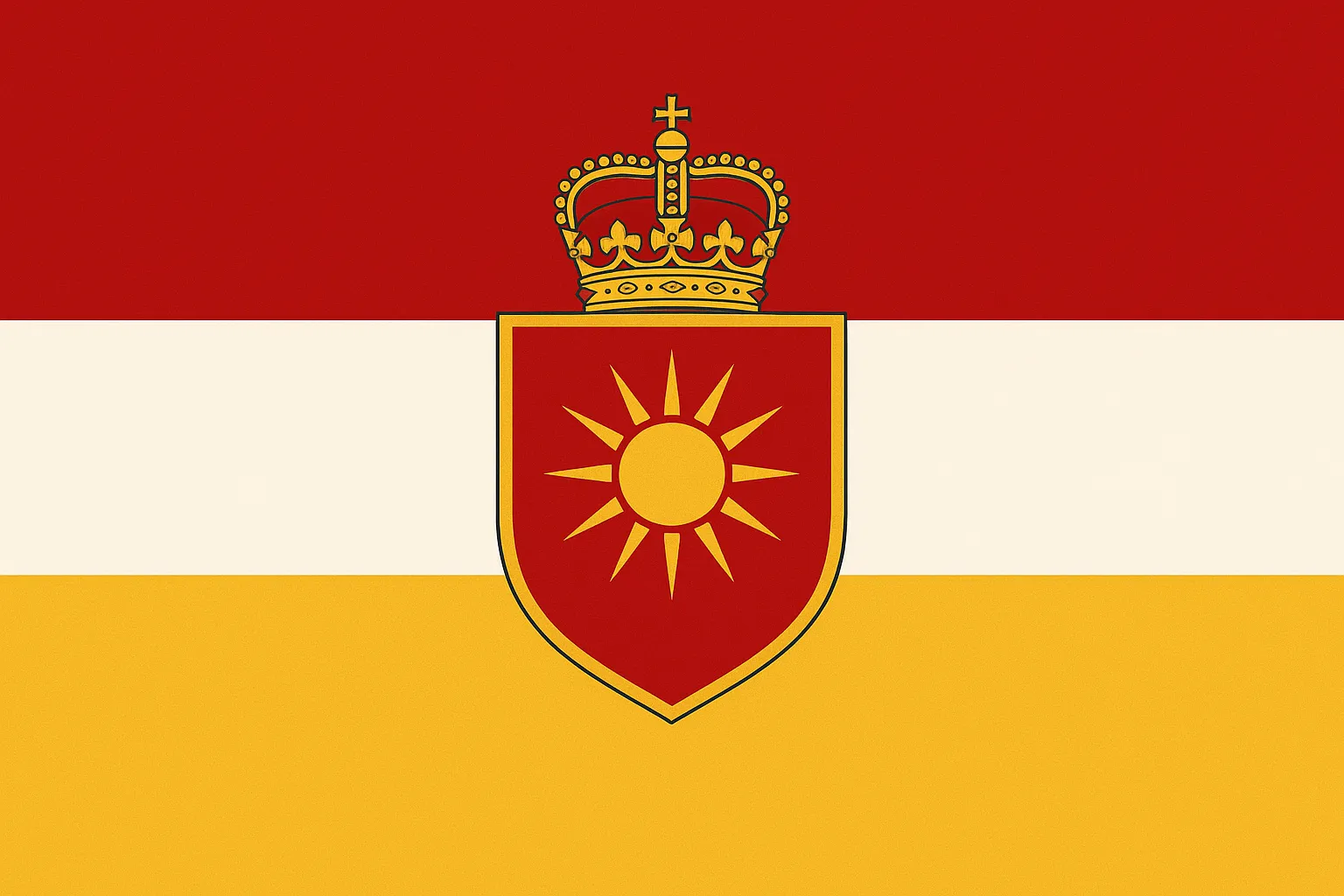 (Flag of the Erulian Empire)
The Erulian Empire is the largest and oldest known political state in Omain, encompassing 19.0 million square kilometers including its mainland territory on Droskarin and full control of the Shersian Archipelago. Originating from the tribal human culture of the Erulians in the region now known as Erule, the Empire has historically served as the dominant cultural, political, and religious force across the world.
At a Glance
Section titled “At a Glance”| Category | Information |
|---|---|
| Capital City | Erule |
| Languages | Erulian (official), Common |
| Currency | Hexic Crown (ɌH) |
| Calendar System | Erulian Calendar |
| Existence | Over 1,500 years |
| Religion (State & Origin) | Hexadem |
| Global Population | ~1.42 billion |
| Population of Empire | ”Erulian” ~441 million (~31% of global population) |
| Total Size | 19.0 million km² |
| System of Rule | Absolute Monarchy |
| Current Ruler | Empress Erolith I |
| Law Enforcement | Centralized imperial courts, trial-based justice |
| Military Power Ranking | #1 globally |
| Wealth Ranking | #2 globally |
Origins and Foundations
Section titled “Origins and Foundations”The empire was founded by Emperor Calados I in Year 0 of the Erulian Calendar, an event marking the formal establishment of the empire, the creation of the Hexadem religion, and the introduction of the first recorded timekeeping system in Omain. The Erulian Calendar divides history into:
- A.H. — After Hexadem (from Year 0 onward)
- B.H. — Before Hexadem (dates prior to the empire’s founding)
Originally composed solely of the Erulian human tribe, the empire gradually expanded through conquest, colonization, religious influence, and integration, eventually evolving into a multicultural imperial state incorporating races, cultures, and regions beyond its homeland.
Throughout its history, the Erulian Empire has exerted control over vast regions of Omain, including large parts of both major continents. Its influence shaped global religion, language, trade, war, and governance. The empire is widely regarded as the primary architect of recorded world history and the standard-setter for calendars, diplomacy, and organized religion.
Although its land holdings have diminished significantly from their height, many nations trace cultural or historical roots back to Erulian rule.
Geography/Borders
Section titled “Geography/Borders”The mainland territory of the Erulian Empire is located on Droskarin, bordered by:
| Neighboring Region | Direction |
|---|---|
| Kingdom of Ka | West |
| Kingdom of Kelar | South |
| Helskirk | South |
| Permatesh | North |
| Terra Fina Channel | East |
In addition to continental borders, the empire fully governs the Shersian Archipelago, located between the Eastern and Western continents.
- Mainland area: 17.9 million km²
- Shersian Archipelago: 1.1 million km²
- Total territory: 19.0 million km²
Imperial naval infrastructure extends across both hemispheres and controls key maritime routes through the central channels of Omain.
Several major natural landmarks are located within or along the borders of the empire:
Dead Man’s Lake
Section titled “Dead Man’s Lake”Located on the border between Erule and the Kingdom of Ka. Named due to its long history as a battlefield and strategic conflict zone.
Erulian Desert
Section titled “Erulian Desert”A vast desert east of the imperial heartland, extending into the foothills of the Western Draconic Mountains. Notable for its rare seasonal snowfall caused by elevation and wind patterns from the mountains.
Erulian Plains
Section titled “Erulian Plains”An extensive grassland region covering much of the empire’s agricultural core. These plains served as the homeland of early Erulian tribes and later became the foundation of imperial expansion.
Politics & Factions
Section titled “Politics & Factions”Overview
Section titled “Overview”The Erulian Empire is governed by an absolute monarchy, the oldest and most stable ruling institution on Omain. Since its founding in 0 A.H. by King Calados I, the Imperial Crown has passed unbroken through the Aquabrand bloodline, making it the longest continuous hereditary lineage in recorded world history.
Political authority in the empire is characterized by an intricate balance between the imperial throne and the Hexadem, the state religion. While the emperor or empress wields ultimate authority in all matters of state, law, and military force, their decisions are traditionally shaped—and at times constrained—by the interpretations and demands of the Hexademic clergy.
The Imperial Lineage
Section titled “The Imperial Lineage”The Erulian political structure revolves entirely around the sanctity of the Aquabrand bloodline.
-
The Crown of Erule is spiritually and legally bound to the House Aquabrand, the founding dynasty.
-
The Hexadem explicitly forbids any individual outside the Aquabrand bloodline from taking the throne.
-
This rule has never been violated, and no foreign or non-Aquabrand ruler has ever held power in the empire.
This absolute restriction has fortified the political identity of Erule for over 1,500 years, shaping its culture around dynastic continuity and divine legitimacy.
The Monarch
Section titled “The Monarch”Authority
Section titled “Authority”The sitting monarch is the undisputed supreme authority within the empire:
-
Commands the military
-
Dictates law
-
Oversees all regional governance
-
Controls foreign relations
-
Holds the right to overrule the Hexadem
Despite this absolute power, Erulian rulers often remain deeply entwined with the religious hierarchy and rarely act without clergy involvement. This blend of divine guidance and personal authority forms the backbone of Erulian political tradition.
Religious Influence
Section titled “Religious Influence”The monarch is expected—though not commanded—to:
-
Maintain strong ties to the Hexadem
-
Seek counsel from the Grand Hex, the leader of the faith
-
Rule in accordance with the values of their baptismal deity
Monarchs who cooperate closely with the church often enjoy stability. Those who defy it, like Emperor Talios II, typically trigger internal unrest, clerical resistance, and political fragmentation.
The Role of the Hexadem
Section titled “The Role of the Hexadem”Although not a ruling body, the Hexadem acts as the spiritual regulatory power of the empire. Its influence includes:
-
Legitimizing rulers
-
Guiding moral and religious conduct
-
Advising on matters of war and diplomacy
-
Interpreting divine will through the Seven Books
The Hexadem cannot depose an emperor directly, but their voice can sway public sentiment, manipulate political factions, and dramatically shift the course of imperial policy.
The Grand Hex
Section titled “The Grand Hex”The religious head of the Hexadem holds immense advisory authority and is often the second-most influential figure in the empire.
The current Grand Hex is:
Grand Hex Selythar Morvath
Section titled “Grand Hex Selythar Morvath”An austere and ascetic scholar known for strict adherence to the Book of Tiamat and unwavering loyalty to Empress Erolith I.
Current Era: The Reign of Empress Erolith I
Section titled “Current Era: The Reign of Empress Erolith I”Empress Erolith I Aquabrand ascended to the throne at age 19, after her father was assassinated by King Marek of the Kingdom of Ka in the infamous duel known as “The Droplet and the Flame.” This event triggered a surge of imperial nationalism and cemented her early rise as both a symbol of martyrdom and divine vengeance.
Erolith I’s Political Character
Section titled “Erolith I’s Political Character”-
Devoutly faithful
-
Baptised under Tiamat, Goddess of Reality
-
Actively follows Tiamat’s doctrines of order, dominance, and clarity
-
Rarely makes a major decision without consulting Grand Hex Selythar
Her reign is marked by:
-
A return to hardline Hexademic orthodoxy
-
Strengthened religious institutions
-
Increased scrutiny of dissent
-
Antagonistic foreign policy toward Ka
-
Renewed imperial cohesion after decades of instability
Erolith I: “Reality bends only to the strong. I shall ensure Erule remains unbreakable.”
Political Structure Summary
Section titled “Political Structure Summary”| Office / Entity | Role |
|---|---|
| Emperor / Empress (Aquabrand Line) | Absolute sovereign. Supreme military, judicial, and political authority. |
| Grand Hex | Spiritual leader of the Hexadem; main counselor to the throne; guardian of doctrine. |
| Hexademic Clergy | Interprets the Seven Books, influences public morality, controls rites and baptisms. |
| Imperial Court | Nobles, advisors, scholars, and military strategists; no real political power but significant cultural influence. |
| Provincial Governors | Enforce imperial law, collect taxes, and maintain order in distant regions. |
Political Culture
Section titled “Political Culture”The political identity of the Erulian Empire is defined by three ideological pillars:
-
Divine Lineage — The Aquabrand bloodline is seen as chosen by the gods.
-
Hexademic Legitimacy — The faith reinforces authority and shapes imperial philosophy.
-
Absolute Rule — Power is centralized, uncompromised, and historically stable.
Erule has never known a government outside monarchy, nor does it culturally imagine one.
Culture
Section titled “Culture”The culture of the Erulian Empire is characterized by a blend of ancient tribal lineage, imperial tradition, religious doctrine, and multicultural integration resulting from centuries of expansion. Originating from the ancestral Erulian peoples of the Erulian Plains, imperial culture has evolved into a refined, hierarchical, and tradition-driven society that places strong emphasis on heritage, faith, and national prestige.
Erulian culture is often described as expressive, ceremonial, and deeply historical, valuing artistry, military honor, religious devotion, and the preservation of imperial identity.
1. Social Values and Identity
Section titled “1. Social Values and Identity”Erulian citizens are taught to view themselves as heirs of a long-standing civilizational legacy. Core cultural values include:
- Honor and familial lineage
- Religious piety toward the Hexadem
- Patriotic loyalty to the Crown
- Formality in public conduct
- Personal valor and martial virtue
Citizen identity is shaped by a belief in cultural destiny: that the empire serves as a civilizing force and steward of historical continuity across Omain.
2. Social Hierarchy
Section titled “2. Social Hierarchy”While officially all imperial citizens share equal legal status under the Empress, social standing is informally influenced by:
- Family reputation and noble lineage
- Military service
- Religious standing within Hexademic institutions
- Regional origin (Erule and old-core provinces viewed as elite)
The nobility remains influential, though titles are increasingly ceremonial outside the capital.
3. Religion and Ritual Life
Section titled “3. Religion and Ritual Life”The Hexadem permeates cultural practices, influencing:
- naming conventions
- holidays and national festivals
- burial rites
- oaths of service
- architecture
Priestly orders hold high authority, and major life events (birth, ascension to adulthood, marriage, military commissioning) are traditionally accompanied by religious ceremonies.
4. Art, Literature & Expression
Section titled “4. Art, Literature & Expression”Erulian artistic culture is renowned for:
- grand religious murals
- epic poetry chronicling imperial conquest
- ornate architecture with arches, spires, and sun motifs
- vibrant court music featuring stringed and percussive instruments
- ceremonial dances performed during national holidays
Art is often propagandistic, serving to reinforce imperial mythology and divine legitimacy.
5. Language & Naming Traditions
Section titled “5. Language & Naming Traditions”The Erulian language forms the administrative and cultural backbone of the empire. Names often feature:
- elongated vowels
- ancestral surnames tied to regions
- honorifics referencing divine or noble lineage
Example structural patterns (fictional):
- Calados er-Valien (“of the Valien line”)
- Erolith Sa’an (“sanctified/ordained”)
6. Food & Cuisine
Section titled “6. Food & Cuisine”Imperial cuisine is diverse due to centuries of territorial expansion. Notable culinary elements include:
- rich spiced meats and stews
- coastal salt-cured seafoods
- strong wines and fruit liqueurs
- bread-based staples flavored with oils and herbs
- ceremonial festival feasts featuring roasted game and sweet pastries
Meals are social events emphasizing hospitality, storytelling, and music.
7. Diplomacy & Cultural Attitude Toward Others
Section titled “7. Diplomacy & Cultural Attitude Toward Others”The empire sees itself as a civilizing authority, which influences foreign relations. Imperial diplomacy often combines:
- religious proselytization
- cultural assimilation
- military imposition when “civil order” is deemed necessary
Foreign cultures may be respected, but particularly on imperial terms—absorbed, documented, and reframed through Erulian ideology.
8. Military Culture
Section titled “8. Military Culture”Military service is seen as a path to honor, citizenship status, and upward mobility. Soldiers are:
- ceremonially blessed before major campaigns
- awarded legacy titles linked to bloodlines
- expected to display courage in death rather than retreat
Festivals often commemorate ancient victories.
9. Cultural Exports
Section titled “9. Cultural Exports”The empire influences global culture through:
- religious conversion
- architectural styles
- legal codification and bureaucracy
- language adoption
- trade networks and naval treaties
Much of Omain’s recorded history is archived in Erulian script.
10. Cultural Tension
Section titled “10. Cultural Tension”As the empire declines territorially and shifts to a multicultural population, tension arises between:
- traditionalists seeking purification of imperial heritage
- pragmatists advocating integration of non-Erulian customs
- conquered peoples reclaiming indigenous identity
These conflicts shape modern politics and ideology.
Law of the Erulian Empire
Section titled “Law of the Erulian Empire”The legal system of the Erulian Empire is a centralized, authoritarian framework rooted in religious doctrine, imperial authority, and centuries of codified legal tradition. Although influenced by regional customs during various eras of expansion, the modern system is unified under the authority of the Empress and enforced through standardized courts, military tribunals, and local magistrates.
Imperial law serves not only as a tool for order but as a means of preserving cultural identity, legitimizing rule, and maintaining religious adherence.
1. Foundations of Law
Section titled “1. Foundations of Law”Erulian law is based on three core sources:
| Source | Description | Authority |
|---|---|---|
| Imperial Decree | Laws declared directly by the Empress; highest legal authority. | Absolute, unquestionable. |
| Hexademic Doctrine | Religious laws derived from Hexadem scripture and priestly interpretation. | Enforced by both clergy & state. |
| The Codex Erulian | A written body of unified civil and military law developed over centuries. | Legal standard across empire. |
While the Codex governs everyday matters such as property and crime, imperial decrees may override all prior laws instantly.
2. Structure of the Legal System
Section titled “2. Structure of the Legal System”Supreme Authority
Section titled “Supreme Authority”- Empress holds full legal power
- Can issue laws without approval
- Can overrule court decisions arbitrarily
Enforcement Bodies
Section titled “Enforcement Bodies”| Institution | Function |
|---|---|
| Imperial Courts | Civil and criminal trials; primary judiciary. |
| Hexademic Tribunals | Handle religious crimes, heresy, relic theft, and sacred disputes. |
| Military Courts | Govern soldiers, wartime crimes, treason, and rebellion. |
| Local Magistrates | Enforce law in provinces; answer directly to imperial overseers. |
All courts operate under the assumption of loyalty to the Crown and faith.
3. Legal Principles
Section titled “3. Legal Principles”Key philosophical tenets of Erulian law include:
- Law serves the empire, not the individual
- Loyalty to crown supersedes local rights
- Religion and law are inseparable
- Crime against the state is worse than crime against citizens
- Foreigners have fewer legal protections than citizens
- Honor and testimony are legally binding oaths
Justice is seen not as impartial, but moral and ideological.
4. Rights and Status
Section titled “4. Rights and Status”| Class | Legal Status |
|---|---|
| Imperial Nobility | Holds privileges, lighter sentences, political immunity in certain cases. |
| Citizens of the Empire | Full legal protection and trial rights. |
| Subjects of Conquered Lands | Partial rights; can gain citizenship through service or loyalty. |
| Non-Citizens / Foreigners | Limited protections; judged under imperial rather than local law. |
| Heretics, Rebels, Enemies of the Crown | No rights; may be executed without trial. |
5. Categories of Crime
Section titled “5. Categories of Crime”Erulian law divides crimes into three classes:
A. Crimes Against the Crown
Section titled “A. Crimes Against the Crown”- treason
- rebellion
- harboring fugitives
- espionage
- defacing imperial symbols
Punishment: execution, exile, forced labor, erasure of family status.
B. Religious Crimes
Section titled “B. Religious Crimes”- heresy (denying Hexadem doctrine)
- blasphemy
- desecration of temples
- unlicensed sorcery
- possession of forbidden relics
Punishment: trials by clergy, penance, execution in severe cases.
C. Civil Crimes
Section titled “C. Civil Crimes”- theft
- murder
- land disputes
- fraud
- property destruction
Punishment: fines, imprisonment, corporal punishment, restitution.
6. Punishments
Section titled “6. Punishments”Punishments vary by class and severity:
| Punishment | Typical Use |
|---|---|
| Fines & Seizures | Economic crimes or disputes. |
| Imprisonment | Short- to mid-term confinement; rehabilitation not prioritized. |
| Labor Sentences | Mines, military roads, shipbuilding. |
| Branding or Mutilation | Marking criminals, especially thieves or heretics. |
| Execution | Treason, heresy, murder, rebellion. |
| Honor Trials | Duel-like redemptive trials for nobles or soldiers. |
Executions may be carried out publicly to demonstrate imperial power.
7. Notable Laws (Examples)
Section titled “7. Notable Laws (Examples)”These can be expanded into full articles later.
- Edict of Eternal Faith — All temples must serve the Hexadem; foreign cults require approval.
- Law of Imperial Speech — Erulian must be used in courts and official documents.
- Bloodline Concordance — Nobility must prove lineage to retain titles.
- Vassal Compliance Act — Conquered regions must supply troops on demand.
- Writ of Maritime Rule — Imperial naval authority supersedes local sea laws.
8. Cultural Attitudes Toward Justice
Section titled “8. Cultural Attitudes Toward Justice”Erulians do not view law as impartial or egalitarian. Justice is seen as:
- an extension of divine order
- a reinforcement of hierarchy
- a tool for protecting the empire’s legacy
Many citizens accept harsh justice as necessary for stability.
Section Placeholders
Section titled “Section Placeholders”9. Legal Timeline
Section titled “9. Legal Timeline”(Section Pending.)
10. Notable Judges, Lawmakers & Legal Scholars
Section titled “10. Notable Judges, Lawmakers & Legal Scholars”(Section Pending.)
11. Key Courts and Judicial Centers
Section titled “11. Key Courts and Judicial Centers”(Section Pending.)
Timeline
Section titled “Timeline”0 A.H.
Section titled “0 A.H.”Calados Aquabrand, age 24, is crowned King of Erule after the formal creation of the Hexadem religion. The clergy vote overwhelmingly for him due to his house’s spiritual ties to Auriel. Erule becomes the first organized nation in Omain.
Calados I: “From order we rise, through faith we endure, and by destiny we rule.”
1 A.H.
Section titled “1 A.H.”The first Hexademic priesthood is structured. Temple districts within Erule are mapped out, and informal village shrines begin to appear. Nothing major militarily.
2 A.H.
Section titled “2 A.H.”Early scribes begin compiling oral traditions into proto-scriptures that will later inform the Seven Books. Minor border villages pledge allegiance to Erule for protection.
3 A.H. — Completion of the Seven Books
Section titled “3 A.H. — Completion of the Seven Books”The Seven Books of the Hexadem are completed by early High Clerics:
-
Book of the Massa’s First — Cleric Joratho Vel
-
Book of Auriel — Esmira Dhalos
-
Book of Shar — High Scribe Teleron Vesh
-
Book of Tiamat & Book of Eldath — Scribe-Lords Marrin & Kelvath Orun
-
Book of Oghma — Archmind Seravus Morn
-
Book of Tetford — Chronist Eldra Vanton
Seravus Morn: “Knowledge is not written; it is awakened.”
4 A.H.
Section titled “4 A.H.”Literacy spreads among the clergy and nobility. The first small scriptoria are built to copy the Seven Books. Nothing notable in foreign policy.
5 A.H. — The Rose Palace & First Grand Hex
Section titled “5 A.H. — The Rose Palace & First Grand Hex”Construction begins on the Rose Palace, an architectural marvel built of rose-colored stone. The Holy Church of the Hexadem is formally dedicated, and Grand Hex Vaelor Primus is appointed as the first head of the faith.
Grand Hex Vaelor Primus: “Let stone and scripture rise together, for both are temples of the divine.”
6 A.H.
Section titled “6 A.H.”Artisans and architects from surrounding regions flock to Erule to work on the Rose Palace. Early codification of urban planning begins in the capital.
7 A.H.
Section titled “7 A.H.”First recorded famine scare, averted by Hexademic grain redistribution. Calados gains a reputation as both pious and practical.
8 A.H. — Obsession with Death
Section titled “8 A.H. — Obsession with Death”Calados becomes increasingly obsessed with death and the demon Talios referenced in the Book of Tiamat. He spends long hours consulting obscure passages and recluses himself more frequently.
Court Advisor Lethiran: “When kings seek answers in shadows, the realm must brace for storms.”
9 A.H.
Section titled “9 A.H.”Rumors spreads among nobles of the king’s macabre fixations, but the common folk remain mostly unaware. The clergy quietly monitor his behavior.
10 A.H. — Hexademical Baptism
Section titled “10 A.H. — Hexademical Baptism”With Erule’s population surpassing 20,000, Hexademical Baptism becomes mandatory. Every newborn is to be registered and blessed under the faith.
Calados I: “If the Hexadem shaped our world, let each child be shaped in their image.”
11 A.H.
Section titled “11 A.H.”First census conducted. Records on population, professions, and temple attendance begin being stored in palace archives.
12 A.H. — First Holy Marriage
Section titled “12 A.H. — First Holy Marriage”Calados marries Lady Seralyne Vorandar, establishing Hexadem-sanctioned marriage as the standard legal and religious bond.
Seralyne: “Love is mortal, but vows are eternal.”
13 A.H.
Section titled “13 A.H.”Minor land disputes arise between rural farmers and early noble estates. The clergy begin acting as mediators.
14 A.H.
Section titled “14 A.H.”Calados commissions a “Book of Lineage” for the Aquabrand family, an early genealogical register used to legitimize royal succession.
15 A.H.
Section titled “15 A.H.”Nothing notably recorded beyond continuing urban growth and temple expansion.
16 A.H. — New Frontier Settlements
Section titled “16 A.H. — New Frontier Settlements”Three new settlements are constructed roughly 25 miles from the capital:
-
Northreach (north)
-
Eastvale (east)
-
Southwatch (south)
Builder Halmar the Stout: “A kingdom grows not from one city, but from the roads that reach beyond it.”
17 A.H.
Section titled “17 A.H.”Road-building begins in earnest to connect Erule and the new settlements. Banditry on these early routes becomes a recurring issue.
18 A.H.
Section titled “18 A.H.”First small “militia bands” are created to patrol trade roads. Not yet a formal army.
19 A.H.
Section titled “19 A.H.”A minor plague outbreak in Eastvale is contained through quarantines and temple-led hygiene edicts.
20 A.H.
Section titled “20 A.H.”Grand Hex Vaelor Primus begins standardizing religious rites across all shrines, ensuring doctrinal unity.
21 A.H.
Section titled “21 A.H.”Tension between reformist and traditionalist clergy quietly surfaces but does not yet lead to schism.
22 A.H.
Section titled “22 A.H.”Seralyne Vorandar becomes more publicly visible, sponsoring festivals and poor relief to improve royal image.
23 A.H. — Birth of Talios
Section titled “23 A.H. — Birth of Talios”Calados and Seralyne have a son: Talios Aquabrand, named after the demon of death.
Calados I: “In my son lives the fear I dare to master.”
24 A.H.
Section titled “24 A.H.”Astrologers proclaim Talios’ birth under “eclipsed omens,” generating both reverence and anxiety.
25 A.H.
Section titled “25 A.H.”Nothing major recorded besides routine governance and minor temple disputes.
26 A.H.
Section titled “26 A.H.”The Rose Palace’s main hall is completed. Foreign visitors begin to view Erule as a rising cultural center.
27 A.H.
Section titled “27 A.H.”The first formal “Hexademic Court” is formed to judge religious disputes and accusations of blasphemy.
28 A.H. — Death of Grand Hex Vaelor
Section titled “28 A.H. — Death of Grand Hex Vaelor”Grand Hex Vaelor Primus dies of natural causes. A grand national funeral is held.
Grand Hex Selvandar Rhune is appointed his successor.
Selvandar Rhune: “Even the holiest flame must dim, so another may brightly burn.”
29 A.H.
Section titled “29 A.H.”Selvandar begins quietly cataloging doctrinal contradictions and ambiguities in the Seven Books for internal use.
30 A.H.
Section titled “30 A.H.”Nothing notably recorded. Stable rule, steady population growth, and temple construction continue.
31 A.H.
Section titled “31 A.H.”Calados’ health begins to subtly decline; he becomes less active in public ceremonies.
32 A.H.
Section titled “32 A.H.”Early merchant guilds form in Erule, laying the groundwork for a more organized economic class.
33 A.H. — Coastal Expansion
Section titled “33 A.H. — Coastal Expansion”Population reaches 56,000. Erule expands its borders to the Terra Fina coast.
The three earlier towns sponsor new settlements:
-
From Northreach → Northpine
-
From Eastvale → Eastbarrow
-
From Southwatch → Southmere
Settler Amasia Lorn: “Where waves touch the stone of Erule, the world itself bows to the future empire.”
34 A.H.
Section titled “34 A.H.”First primitive docks are built at the coast; no real seafaring yet, just river and shoreline craft.
35 A.H.
Section titled “35 A.H.”Calados begins to delegate more power to trusted advisors and to Grand Hex Selvandar.
36 A.H.
Section titled “36 A.H.”Rumors circulate that Talios, now 13, is unusually cold and observant for his age.
37 A.H.
Section titled “37 A.H.”Nothing notably recorded. Administrative refinement and boundary marking continue.
38 A.H.
Section titled “38 A.H.”Minor food shortages lead to the first serious grain storage policies for the capital.
39 A.H.
Section titled “39 A.H.”Talios begins private tutoring in theology and early expansionist philosophy.
40 A.H. — Death of Calados I
Section titled “40 A.H. — Death of Calados I”Calados dies from pancreatic failure.
Talios I is crowned King of Erule.
Talios I: “My father dreamt of destiny. I shall seize it.”
41 A.H.
Section titled “41 A.H.”Talios reviews legal, religious, and economic structures. He quietly begins planning a transition from kingdom to empire.
42 A.H. — Foundation of the Erulian Empire
Section titled “42 A.H. — Foundation of the Erulian Empire”Talios I marries Lady Arthelyn Sorelle. After structural reforms, he announces the conversion of Erule into the Erulian Empire.
Talios I: “A king rules land. An emperor rules history.”
43 A.H. — Holy Expansion Decree
Section titled “43 A.H. — Holy Expansion Decree”The newly formed Empire creates its first organized non-Inquisitorial army and declares a Holy Expansion, sanctioned by the Hexadem.
Grand Hex Selvandar: “If war must come, let it march with scripture in hand.”
44 A.H. — First Contact with Elves
Section titled “44 A.H. — First Contact with Elves”Erulian forces encounter an elven tribe in what will become Permatesh. Initial contact is wary but non-violent.
Explorer Varnith Lys: “Their eyes held centuries. Our empire held ambition.”
45 A.H.
Section titled “45 A.H.”Diplomacy continues with the elves, but imperial advisors pressure Talios to “secure” the forest for strategic reasons.
46 A.H. — Conquest of Permatesh
Section titled “46 A.H. — Conquest of Permatesh”The Empire conquers the Permateshian Forest, enslaving the elven tribe and formally subsuming the region.
Talios I: “A forest bows faster than a crown.”
47 A.H.
Section titled “47 A.H.”Elven slaves begin appearing in noble households and imperial worksites. Some early rebellions are brutally suppressed.
48 A.H.
Section titled “48 A.H.”Nothing notably recorded beyond ongoing consolidation and resource extraction from Permatesh.
49 A.H.
Section titled “49 A.H.”Talios orders a primitive “border-road” to connect Erule to Permatesh, improving troop movement.
50 A.H. — Birth of Talios II
Section titled “50 A.H. — Birth of Talios II”Talios I’s son, Talios II, is born.
Talios I: “He shall inherit not just a throne, but a world.”
51 A.H.
Section titled “51 A.H.”Nothing major; Talios I strengthens his personal guard and begins surrounding himself with more aggressive generals.
52 A.H.
Section titled “52 A.H.”First organized slave markets appear in the capital, a dark but pivotal step in imperial economics.
53 A.H.
Section titled “53 A.H.”Hexademic clergy grow increasingly uneasy about imperial brutality but remain politically cautious.
54 A.H.
Section titled “54 A.H.”Explorers move deeper into the desert searching for resources and uncontacted peoples.
55 A.H. — Orc Conquest
Section titled “55 A.H. — Orc Conquest”Empire encounters an orc tribe in the middle of the desert. They are defeated and enslaved in about a month.
General Rathmon: “They fought like storms. We answered with thunder.”
56 A.H.
Section titled “56 A.H.”Orc labor is redirected toward harsh desert fortifications and road building. Cruel conditions begin to define their enslavement.
57 A.H. — Draconic Mountains Sighted
Section titled “57 A.H. — Draconic Mountains Sighted”Imperial scouts encounter the Draconic Mountains (future Kelar territories), but Talios refuses to advance—too dangerous, seemingly empty.
Scout Orridan Mareth: “Those peaks do not warn—they dare.”
58 A.H.
Section titled “58 A.H.”The Empire enters a period of consolidation, focusing on internal organization and population growth.
New settlement founded: Bramhold.
59 A.H.
Section titled “59 A.H.”Second settlement in this phase founded: Sarnwick.
60 A.H.
Section titled “60 A.H.”Third settlement established: Talmarin, named after Talios I himself.
61 A.H.
Section titled “61 A.H.”Fourth new settlement: Velcrist, an early mining town.
62 A.H.
Section titled “62 A.H.”Fifth new settlement: Harrowdeep, founded near natural cave systems.
63 A.H.
Section titled “63 A.H.”Slave uprisings occur in two frontier settlements; both are violently suppressed.
64 A.H.
Section titled “64 A.H.”Nothing notably recorded aside from continued expansion of roads, temples, and slave infrastructure.
65 A.H.
Section titled “65 A.H.”Early attempts at basic legal codification for slaves and citizens are drafted but not widely enforced.
66 A.H.
Section titled “66 A.H.”Hexademic scholars publish the first wide-distribution commentary on the Seven Books, subtly justifying imperial rule.
67 A.H.
Section titled “67 A.H.”Talios I begins to show signs of paranoia, increasingly relying on brutal enforcement.
68 A.H.
Section titled “68 A.H.”Nothing notably recorded beyond minor diplomatic exchanges and fortress-building.
69 A.H.
Section titled “69 A.H.”Quiet year; imperial lines hold, no new major conquests.
70 A.H.
Section titled “70 A.H.”Internal reports suggest growing unrest among conquered humans and enslaved races, especially in Permatesh and the desert.
71 A.H. — Contact with Bolborkians
Section titled “71 A.H. — Contact with Bolborkians”Imperial expedition encounters the Bolborkian human tribe. Initial contact is diplomatic and trade-based.
Talios I: “They speak like men, but think like obstacles.”
72 A.H.
Section titled “72 A.H.”Trade deepens between Erule and Bolborkia; cultural exchange occurs but imperial agents begin mapping strategic weaknesses.
73 A.H.
Section titled “73 A.H.”Clashes break out between Bolborkian warriors and imperial patrols. Talks begin to sour.
74 A.H. — Conquest of Bolborkia
Section titled “74 A.H. — Conquest of Bolborkia”After escalating conflict, the Empire fully absorbs Bolborkia by armed conquest.
Talios I: “Steel decides where borders stand.”
75 A.H.
Section titled “75 A.H.”Bolborkian unrest simmers. Quiet efforts at cultural erasure begin—Hexademic temples replace local shrines.
76 A.H.
Section titled “76 A.H.”Nothing notably recorded beyond ongoing resistance and imperial crackdowns.
77 A.H.
Section titled “77 A.H.”A subtle network of Bolborkian rebels begins to form; imperial spies report growing danger.
78 A.H. — Death of Talios I
Section titled “78 A.H. — Death of Talios I”During a Bolborkian uprising, Talios I is struck by an arrow in the chest and dies hours later. The rebellion is crushed.
Last recorded words of Talios I: “An empire bleeds… but never falls.”
79 A.H. — Talios II Crowned
Section titled “79 A.H. — Talios II Crowned”Talios II ascends the throne at a young age, inheriting a vast but unstable empire.
Talios II: “My father built an empire. I will perfect it.”
80 A.H. — Reign of Terror Begins
Section titled “80 A.H. — Reign of Terror Begins”Talios II formalizes torture and public display of rebels as legal and encouraged. Fear becomes state policy.
Talios II: “Mercy weakens the throne.”
81 A.H. — New Grand Hex
Section titled “81 A.H. — New Grand Hex”Grand Hex Selvandar Rhune dies of lung cancer.
Talios II appoints Grand Hex Thamior Verden, a reluctant but influential cleric.
Thamior Verden: “A tyrant needs a priest. I shall be neither.”
82 A.H.
Section titled “82 A.H.”Thamior quietly organizes a faction within the clergy critical of Talios II’s cruelty, but they stop short of open defiance.
83 A.H.
Section titled “83 A.H.”Nothing notable recorded beyond continued terror tactics, show trials, and propaganda.
84 A.H. — Scandal of the Emperor
Section titled “84 A.H. — Scandal of the Emperor”Talios II fathers a child with a woman he refuses to marry, then has her executed. The clergy erupt in outrage, demanding repentance.
Grand Hex Thamior: “Redemption begins where arrogance ends.”
85 A.H. — Invention of the Sea Vessel & Orc Exile
Section titled “85 A.H. — Invention of the Sea Vessel & Orc Exile”Under pressure to show “holy innovation,” Talios II orders engineers to invent a floating device.
The boat is successfully created.
Talios II orders all orc slaves loaded onto ships and cast into the unknown ocean to eliminate them and their rebellions, unaware of other continents.
Engineer Rethos Mal: “It floats because it must.”
86 A.H.
Section titled “86 A.H.”Ships begin to be used for fishing and short-range coastal trips. Some see sea trade potential; others fear the unknown waters.
87 A.H.
Section titled “87 A.H.”Imperial terror continues; distant settlements are forced into harsher tithes to fund naval experiments.
88 A.H.
Section titled “88 A.H.”Nothing notably recorded beyond expanding coastal villages and improved docks.
89 A.H.
Section titled “89 A.H.”Initial scouting ventures hug the coastlines of Droskarin, mapping bays and inlets.
90 A.H. — Dominion of Droskarin
Section titled “90 A.H. — Dominion of Droskarin”The Empire completes its conquest and control over all of Droskarin. Its rule is absolute but resented.
Imperial Historian Valeth: “From desert to forest, the continent now wears a single crown.”
91 A.H.
Section titled “91 A.H.”Orcs are presumed extinct or lost; no one expects to see them again. Naval attention wanes slightly.
92 A.H. — Discovery of Shersia
Section titled “92 A.H. — Discovery of Shersia”A fishing vessel spots an orc ship on the horizon. Talios II dispatches a scouting fleet and discovers Shersia.
Captain Elrath: “The sea remembers what men try to forget.”
93 A.H.
Section titled “93 A.H.”Imperial settlers land on Shersia, establishing the first coastal forts.
94 A.H.
Section titled “94 A.H.”Conflicts with surviving orc populations at sea are brief; the Empire has superior organization and numbers.
95 A.H.
Section titled “95 A.H.”Nothing major recorded beyond steady Shersian colonization efforts.
96 A.H.
Section titled “96 A.H.”Shersia is formally declared a frontier province of the Erulian Empire.
97 A.H.
Section titled “97 A.H.”Slave transport and penal exiles begin to be redirected to Shersia instead of internal camps.
98 A.H.
Section titled “98 A.H.”Cultural blending begins in small Shersian settlements, though heavily under imperial control.
99 A.H.
Section titled “99 A.H.”Nothing notably recorded. The Empire is stretched but stable, ruling through fear.
100 A.H.
Section titled “100 A.H.”A century has passed since Calados I took the crown. The Empire dominates Droskarin and Shersia, rules through terror under Talios II, and has unknowingly set the stage for future resistance and global entanglements.
Anonymous Hexademic Scribe, 100 A.H.:
“A hundred years of empire, and still the gods have not decided whether to bless it or break it.”
101 A.H.
Section titled “101 A.H.”Talios II legitimises his bastard son and renames him Talios III, declaring him heir.
Quote: “Blood denied becomes blood revealed.” —Talios II
102 A.H.
Section titled “102 A.H.”A new imperial census reveals population growth past 300,000.
103 A.H.
Section titled “103 A.H.”Temple scribes quietly record rising public fear of Talios II.
104 A.H.
Section titled “104 A.H.”First anonymous pamphlets calling the Emperor a “tyrant of ash” circulate.
105 A.H.
Section titled “105 A.H.”Hexadem clergy begin covertly plotting against Talios II, fearing he has abandoned divine guidance.
Quote: “A king who turns from the gods soon turns upon his people.” —Cleric Miradun Sahl
106 A.H.
Section titled “106 A.H.”Two priests mysteriously disappear after publicly criticizing imperial punishment laws.
107 A.H.
Section titled “107 A.H.”The Hammerfall Revolt begins—dwarves in the Chilborkian mines launch a massive uprising.
108 A.H.
Section titled “108 A.H.”Rebels collapse two major tunnels, killing 400 imperial soldiers.
109 A.H.
Section titled “109 A.H.”Hammerfall Revolt crushed after brutal tunnel warfare.
Quote: “Stone breaks before the Emperor bends.” —General Varros Dhal
110 A.H.
Section titled “110 A.H.”Mining output triples due to harsher quotas imposed on defeated dwarves.
111 A.H.
Section titled “111 A.H.”Bolborkian tribes launch a coordinated rebellion, cutting imperial supply routes.
112 A.H.
Section titled “112 A.H.”Rebels seize two watchtowers; Emperor Talios II vows their “utter erasure.”
113 A.H.
Section titled “113 A.H.”Imperial envoys attempt diplomacy; rebels refuse.
114 A.H. — War of Branch and Flame
Section titled “114 A.H. — War of Branch and Flame”Erule wins—but Emperor Talios II is killed in battle by a Bolborkian javelin.
Buried outside the capital in disgrace.
Quote: “Fear cannot build what honor alone sustains.” —Grand Hex Aelindra Volthes
115 A.H.
Section titled “115 A.H.”Talios III crowned. Immediately begins reversing his father’s cruelty.
116 A.H.
Section titled “116 A.H.”Slaves receive limited legal protections for the first time.
117 A.H.
Section titled “117 A.H.”First attempt at reorganizing colonial taxation.
118 A.H.
Section titled “118 A.H.”Hexadem regains judicial and educational authority.
119 A.H.
Section titled “119 A.H.”Era of Reform complete—empire stabilizes.
Quote: “Where my father ruled by terror, I will rule by truth.” —Talios III
120 A.H.
Section titled “120 A.H.”The empire experiences a cultural renaissance in theatre and poetry.
121 A.H.
Section titled “121 A.H.”Talios III marries Serelith Vaemar.
122 A.H.
Section titled “122 A.H.”His son is born—he names him Kalipes (“Weak”).
Quote: “Strength flows from destiny, not birth… and I see no destiny in you.” —Talios III
123 A.H.
Section titled “123 A.H.”Scouts discover Virelya west of Shersia.
124 A.H.
Section titled “124 A.H.”Imperial shipyards triple production for a transoceanic expedition.
125 A.H.
Section titled “125 A.H.”Fleet lands on Virelya’s east coast; first settlement founded in modern Garenia.
Quote: “Beyond the horizon lies fate unclaimed.” —Admiral Solthor Ren
126 A.H.
Section titled “126 A.H.”Scouts map the Hatland forests.
127 A.H.
Section titled “127 A.H.”First contact with gnomes—amicable.
128 A.H.
Section titled “128 A.H.”First contact with goblins—hostile.
129 A.H.
Section titled “129 A.H.”Orc tribes spotted in the Cascade region.
130–134 A.H. — The Garenian Campaign
Section titled “130–134 A.H. — The Garenian Campaign”Erule systematically conquers the orc tribes.
134 A.H.: Final submission of the Cascades.
Quote: “The mountains echo with the roar of victory.” —General Vaelmir Coran
135–142 A.H. — The Virelyan Conquest
Section titled “135–142 A.H. — The Virelyan Conquest”Major milestones:
-
135: Goblin clans scattered
-
137: Thaxted pacified
-
138: Hatland secured
-
140: Orc uprisings crushed
-
142: Empire reaches the western shores of Virelya
143 A.H.
Section titled “143 A.H.”Grand Hex Aelindra Volthes dies. Massive funeral.
Dymerion Thalos appointed as new Grand Hex.
144 A.H.
Section titled “144 A.H.”Paladin order “Blades of Tiamat” founded to expand Hexadic influence.
145 A.H.
Section titled “145 A.H.”Talios III encounters Grantia—vastly superior technology forces him to retreat.
Quote: “Some doors hide worlds not meant for mortal hands.” —Talios III
146 A.H.
Section titled “146 A.H.”Growing unease among colonial elites about imperial overreach.
147 A.H.
Section titled “147 A.H.”Talios III is shot by an orcish arrow in Garenia; dies of infection.
Buried with honor beside Talios I.
148 A.H.
Section titled “148 A.H.”Kalipes crowned Emperor. Marries Eloria Suleth.
149 A.H.
Section titled “149 A.H.”Birth of Palipes.
150 A.H.
Section titled “150 A.H.”Small border skirmishes; Kalipes fails to respond decisively.
151 A.H.
Section titled “151 A.H.”Virelyan colonies rise in revolt due to weak leadership.
152 A.H.
Section titled “152 A.H.”Kalipes offers peaceful autonomy, establishing:
-
Thaxted
-
Uxbrid
-
Hatland
-
Garenia
Colonial peace restored.
Quote: “A quiet crown survives longer than a bloody one.” —Kalipes I
153 A.H.
Section titled “153 A.H.”Colonial charters formalized.
154 A.H.
Section titled “154 A.H.”Hexadem quietly marks Kalipes as “adequate, if uninspiring.”
155 A.H.
Section titled “155 A.H.”Shersian agitation begins.
156 A.H.
Section titled “156 A.H.”Shersian councils form.
157 A.H.
Section titled “157 A.H.”Shersian rebels sabotage two coastal warehouses.
158 A.H.
Section titled “158 A.H.”Empire issues warnings—ignored.
159 A.H.
Section titled “159 A.H.”Shersia petitions for colony status.
160 A.H.
Section titled “160 A.H.”Kalipes refuses.
161 A.H.
Section titled “161 A.H.”Shersia petitions again—refused.
162 A.H.
Section titled “162 A.H.”Tensions escalate further.
163 A.H.
Section titled “163 A.H.”Shersia attacks tax ships.
171 A.H.
Section titled “171 A.H.”Shersia demands recognition once more—denied.
172 A.H.
Section titled “172 A.H.”Shersia rebels; trade collapses.
Kalipes grants colonial status.
Quote: “When a people demand freedom, no empire may hold them long.” —Shersian Elder Varnel
173 A.H.
Section titled “173 A.H.”Kalipes is poisoned at a banquet. Public reaction is muted.
174 A.H.
Section titled “174 A.H.”Palipes I crowned, already obsessed with magical study.
175–180 A.H. — Arcane Reforms
Section titled “175–180 A.H. — Arcane Reforms”Magic Colleges founded across Droskarin.
Hexadem disapproves.
Quote: “Knowledge is the highest throne.” —Palipes I
181 A.H.
Section titled “181 A.H.”Palipes ignores warnings of rising colonial unrest.
182–196 A.H. — The Great Western Secession
Section titled “182–196 A.H. — The Great Western Secession”All colonies revolt and successfully break free.
Losses are devastating.
Quote: “A kingdom stretched too thin is no kingdom at all.” —Grand Hex Dymerion Thalos
197 A.H.
Section titled “197 A.H.”Empire contracts inward; tightening of laws begins.
198 A.H.
Section titled “198 A.H.”Grand Hex Dymerion retires; Velmaris Endreth appointed.
199 A.H.
Section titled “199 A.H.”Hexadem publicly denounces imperial magical experiments.
200 A.H.
Section titled “200 A.H.”Palipes creates a longevity potion, committing a grave theological offence.
Clergy declares it a “crime against fate.”
Quote: “To flee time is to flee Tetford Himself.” —Grand Hex Velmaris Endreth
201 A.H. – Whispers of Immortality
Section titled “201 A.H. – Whispers of Immortality”Rumors spread through Erule that Emperor Palipes appears younger, his skin smoother, his hair darker. Citizens whisper that he has “touched time.”
Grand Hex Velmaris Endreth: “Time is a gift of Tetford. To steal it is blasphemy.”
202 A.H. – Marriage of the Timeless Emperor
Section titled “202 A.H. – Marriage of the Timeless Emperor”Palipes marries Lyrira Solven, a calm and wise noblewoman known for diplomatic instincts. She becomes his counterweight.
They conceive their first child that winter.
203 A.H. – Birth of Zedric I
Section titled “203 A.H. – Birth of Zedric I”A son is born: Zedric Aquabrand. Palipes is proud but distant, devoting more time to arcane study.
Lyrira soon becomes pregnant again.
204 A.H. – Birth of Izzavel
Section titled “204 A.H. – Birth of Izzavel”Daughter Izzavel Aquabrand is born—strong-willed and healthy. She quickly becomes loved among courtiers.
205 A.H. – Growing Weariness of the Hexadem
Section titled “205 A.H. – Growing Weariness of the Hexadem”Hexademic priests tire of Palipes’s disregard for governance and his obsession with life-prolonging magic.
Internal discussions about limiting imperial magical authority begin.
206 A.H.
Section titled “206 A.H.”Merchants complain of increased monster sightings on desert routes. The emperor does not respond.
207 A.H. – The Second Hammerfall: Dwarven Rebellion
Section titled “207 A.H. – The Second Hammerfall: Dwarven Rebellion”Dwarves revolt again in Chilborkia, using newly opened tunnels.
This time, the empire is unprepared.
Palipes ignores the rebellion entirely, deepening national resentment.
Dwarven Leader Grokkan Stoneveil: “If the Emperor hides from us, let the mountains speak for him.”
208 A.H. – Imperial Failure in Chilborkia
Section titled “208 A.H. – Imperial Failure in Chilborkia”Imperial forces repeatedly fail to hold ground underground.
Dwarves use collapsing corridors, fire-smoke suffocation, and trapped chambers to push Erulians back.
209 A.H. – Loss of Chilborkia
Section titled “209 A.H. – Loss of Chilborkia”Chilborkia declares independence, expelling all imperial forces.
The empire loses its greatest metal source.
Chorkar Ironmaul: “We mined the empire’s strength. Now we mine our freedom.”
210 A.H.
Section titled “210 A.H.”Weapon shortages begin to affect military recruitment and equipment maintenance.
211 A.H. – Bolborkians Rise Again
Section titled “211 A.H. – Bolborkians Rise Again”Inspired by Chilborkia, the Bolborkian tribes rebel, striking garrisons with guerrilla tactics.
212 A.H. – Alliance of Forest and Flame
Section titled “212 A.H. – Alliance of Forest and Flame”Permateshian elves ally with Bolborkians, forming a formidable coalition.
Palipes remains detached, absorbed in dangerous rituals.
213–220 A.H. – The Bolborkian–Permatesh War
Section titled “213–220 A.H. – The Bolborkian–Permatesh War”A devastating eight-year conflict ravages eastern Droskarin.
-
215: Empire loses control of key forest routes.
-
217: Elven archers annihilate an imperial cohort in the Battle of Silverbark.
-
220: War ends in defeat for Erule—Bolborkia and Permatesh become independent.
General Hadrim Sorn: “We lost not to strength, but to an emperor who would not look up from his books.”
221 A.H. – Hexademic Conspiracy Rekindled
Section titled “221 A.H. – Hexademic Conspiracy Rekindled”The Hexadem begins quietly plotting how to remove Palipes after the empire’s humiliation.
222 A.H.
Section titled “222 A.H.”Public trust in the emperor reaches an all-time low. Trade slows.
223 A.H.
Section titled “223 A.H.”Taxes rise drastically to replace lost metals, sparking unrest.
224 A.H. – Birth of the Acting Emperor
Section titled “224 A.H. – Birth of the Acting Emperor”Palipes creates a new imperial role: Acting Emperor, second only to the throne.
He appoints his loyal general Mavros Jorandel, a brilliant strategist.
Mavros now rules in all matters except matters of arcana.
Mavros Jorandel: “If the emperor will not rule the empire, then someone must.”
225 A.H. – Helskirk Rebellion Crushed
Section titled “225 A.H. – Helskirk Rebellion Crushed”Helskirk tribes revolt, but the Acting Emperor crushes the uprising swiftly and with precision.
226 A.H.
Section titled “226 A.H.”Mavros fortifies the northern borders to prevent further tribal uprisings.
227 A.H.
Section titled “227 A.H.”Imperial shipyards begin producing more warships in anticipation of future conflict.
228 A.H.
Section titled “228 A.H.”Hexadem privately expresses frustration with Palipes’s unnatural longevity.
229 A.H.
Section titled “229 A.H.”Palipes reportedly conducts experiments involving stolen elven artifacts.
230 A.H. – The Emperor Who Does Not Age
Section titled “230 A.H. – The Emperor Who Does Not Age”Palipes’s lack of aging becomes undeniable; his youth remains while his children grow.
Fear and religious outrage rise.
Grand Hex Velmaris: “A man who does not age is no longer walking the mortal path.”
231 A.H. – Prince Zedric Marries
Section titled “231 A.H. – Prince Zedric Marries”Prince Zedric marries Alendra Forvana, a Permateshian-descended noblewoman.
They conceive a child shortly after.
232 A.H. – Birth of Zedric II
Section titled “232 A.H. – Birth of Zedric II”Zedric II is born—strong, healthy, and favored by the Hexadem.
233 A.H. – Bolborkian Strike in the Desert
Section titled “233 A.H. – Bolborkian Strike in the Desert”Bolborkian raiders attack an imperial desert stronghold. They fail to capture it but weaken imperial control in the region.
234 A.H.
Section titled “234 A.H.”Supply caravans across the desert begin traveling in guarded convoys.
235 A.H. – Failed Diplomacy
Section titled “235 A.H. – Failed Diplomacy”Acting Emperor Mavros attempts diplomacy with Bolborkia.
Bolborkia demands annexation of Helskirk—the empire refuses.
Mavros: “Peace bought with surrender is no peace at all.”
236 A.H.
Section titled “236 A.H.”Bolborkian guerrilla raids increase in frequency.
237 A.H. – Record Broken
Section titled “237 A.H. – Record Broken”Palipes becomes the oldest human in recorded history, surpassing Joratho Vel.
The Hexadem is furious, interpreting this as direct defiance of Tetford.
High Cleric Sarn Valthis: “No mortal should outlive their era by stealing from time.”
238–239 A.H.
Section titled “238–239 A.H.”Secret Hexademic councils discuss banning longevity magic after Palipes’s death.
240 A.H. – The Banning Drawn in Ink
Section titled “240 A.H. – The Banning Drawn in Ink”The Hexadem drafts internal laws against longevity magic to be enacted once Palipes dies.
241 A.H.
Section titled “241 A.H.”Imperial academics begin to fear the emperor after witnessing unstable magical behavior.
242 A.H. – Permateshian Plea Rejected
Section titled “242 A.H. – Permateshian Plea Rejected”Permateshian elves request resource aid from the empire.
Palipes demands they submit as a colony first—the elves refuse.
243 A.H. – Empire Weakens
Section titled “243 A.H. – Empire Weakens”With Chilborkia lost, the empire faces severe metal shortages.
Plans to reconquer Chilborkia begin.
244 A.H.
Section titled “244 A.H.”The Acting Emperor begins preparations for a northern campaign.
245–247 A.H. – War for Chilborkia
Section titled “245–247 A.H. – War for Chilborkia”245 A.H.: Mavros launches an invasion.
246 A.H.: Heavy losses underground; dwarves counter every tactic.
247 A.H.: War ends in imperial defeat; Chilborkia remains independent.
Dwarven Defender: “The mountain bows to no empire.”
248 A.H. – Bolborkian Opportunism
Section titled “248 A.H. – Bolborkian Opportunism”Bolborkians exploit imperial weakness and seize parts of the desert abandoned during the Chilborkian War.
249 A.H. – Imperial Defeat Confirmed
Section titled “249 A.H. – Imperial Defeat Confirmed”Chilborkia formally solidifies independence.
Imperial pride crumbles.
250 A.H. – The Death of Palipes
Section titled “250 A.H. – The Death of Palipes”Palipes dies in a magical explosion within his laboratory.
His body is never found.
He is buried symbolically at the University of Magic.
Grand Hex Velmaris: “He reached for eternity… and fell into the void.”
251 A.H. – Zedric I Crowned
Section titled “251 A.H. – Zedric I Crowned”Zedric I becomes Emperor, focusing on restoring unity and stability.
252 A.H. – Longevity Magic Forbidden
Section titled “252 A.H. – Longevity Magic Forbidden”The Hexadem publicly bans longevity magic across Omain.
Hex Khorandel Vex (new Grand Hex): “Life is sacred because it ends.”
253 A.H.
Section titled “253 A.H.”Zedric reforms taxation to compensate for war losses.
254 A.H. – Death of Velmaris
Section titled “254 A.H. – Death of Velmaris”Grand Hex Velmaris dies of a chest infection.
A grand funeral is held.
Khorandel Vex becomes Grand Hex.
255 A.H.
Section titled “255 A.H.”Zedric establishes new logistics protocols for army supply.
256 A.H. – Death of Zedric I
Section titled “256 A.H. – Death of Zedric I”Zedric I dies from a waterborne illness, becoming the shortest-reigning emperor.
Buried privately on his estate.
257 A.H. – Zedric II Crowned
Section titled “257 A.H. – Zedric II Crowned”Zedric II becomes Emperor.
He imposes Hexademical Baptism on the military, creating the foundation of the God-Regiment system (precursor to the Inquisitor system).
258 A.H. – Marriage of Zedric II
Section titled “258 A.H. – Marriage of Zedric II”Zedric marries Safira Delmora, a noblewoman from southern Erule.
They conceive a child.
259 A.H. – Ilaria & The Third Subjugation War Begins
Section titled “259 A.H. – Ilaria & The Third Subjugation War Begins”Zedric’s daughter Ilaria is born.
Zedric launches an invasion of Permatesh.
Bolborkia strikes the desert again—but Zedric anticipated it and massacres their forces, leaving bodies as a warning.
The Third Subjugation War begins.
Zedric II: “Mercy is wasted on those who bite the hand that fed them.”
260 A.H. – Fall of Permatesh
Section titled “260 A.H. – Fall of Permatesh”Permatesh is fully conquered in under a year.
Empire rests and regroups.
261–263 A.H. – The Bolborkian Campaign
Section titled “261–263 A.H. – The Bolborkian Campaign”Zedric turns the full might of the empire on Bolborkia.
-
261: Initial invasion.
-
262: Forest strongholds destroyed.
-
263: Bolborkia falls and is annexed.
General Lorimar Tesh: “The forest burns, and with it, rebellion.”
264 A.H. – Illness of Zedric
Section titled “264 A.H. – Illness of Zedric”Zedric becomes deathly ill; campaigns pause.
265–267 A.H. – The Chilborkian Final Conquest
Section titled “265–267 A.H. – The Chilborkian Final Conquest”Oghma-engineers design underground warfare protocols.
-
265: Invasion begins.
-
266: Imperial forces progress through tunnels systematically.
-
267: Chilborkia is fully conquered; the empire controls Droskarin again.
268 A.H. – Birth of the Holy Hexadem Fleet
Section titled “268 A.H. – Birth of the Holy Hexadem Fleet”Zedric constructs a massive fleet: The Holy Hexadem —six flagships, each led by an officer from one god-regiment.
269 A.H. – 1000 Ships Strong
Section titled “269 A.H. – 1000 Ships Strong”The fleet exceeds 1000 vessels and sails to reconquer Shersia—successfully.
270 A.H.
Section titled “270 A.H.”Shersian ports fortified under new imperial command.
271–272 A.H. – War with Uxbrid
Section titled “271–272 A.H. – War with Uxbrid”The fleet clashes with Uxbridian ships.
Following one vessel, they discover an archipelago north of Shersia.
Zedric ignores the discovery and pushes toward Uxbrid.
272–276 A.H. – Siege of Uxbrid
Section titled “272–276 A.H. – Siege of Uxbrid”The deadliest conflict in Omain’s history—37,000 dead.
After brutal urban warfare, Uxbrid is annexed.
Zedric II: “Only the gods may judge what we must do for unity.”
277–278 A.H.
Section titled “277–278 A.H.”Thaxted and Hatland fall with minimal resistance; local leaders accept imperial rule for stability.
279–283 A.H. – The World Unified
Section titled “279–283 A.H. – The World Unified”Garenia is conquered in 3 weeks.
By 283 A.H., Virelya is fully subdued.
The Third Subjugation War ends.
Zedric II is proclaimed “Zedric the Undefeated.”
Imperial Historian Caleth Morn: “He bent continents to his will and never once bent his knee.”
284 A.H. – Shadows in the Lungs
Section titled “284 A.H. – Shadows in the Lungs”Zedric begins showing signs of lung cancer.
285 A.H. – Decline of the Invincible
Section titled “285 A.H. – Decline of the Invincible”Zedric grows gravely ill. The Hexadem spares no expense in attempting treatments.
286 A.H. – The Emperor’s Last Battle
Section titled “286 A.H. – The Emperor’s Last Battle”Zedric dies of cancer—the only battle he ever lost.
Over 600,000 mourners flood Erule’s streets; he is buried in the Grand Cathedral and sanctified under Tiamat.
Grand Hex Khorandel Vex: “He conquered the world, but fate conquers all.”
287 A.H. – Ilaria Crowned Empress
Section titled “287 A.H. – Ilaria Crowned Empress”Zedric’s daughter Ilaria becomes Empress—first woman to rule Erule.
288–289 A.H.
Section titled “288–289 A.H.”Ilaria stabilizes the empire, studies previous losses, and drafts a plan for sustainable rule.
290 A.H. – The Great Reorganization
Section titled “290 A.H. – The Great Reorganization”With Hexademic approval, Ilaria divides the empire into four states:
-
Erulian Empire (core)
-
Helskirk Colonial State (Helskirk + Chilborkia + proto-Kelar)
-
Uxbrid Colony
-
Thaxted Colony
Colonies retain autonomy under taxation.
Empress Ilaria: “An empire must breathe. Constriction leads only to death.”
291 A.H. – Paid Slavery
Section titled “291 A.H. – Paid Slavery”Ilaria decrees that slaves must be paid wages—still bound but compensated.
292 A.H. – Marriage and Heir
Section titled “292 A.H. – Marriage and Heir”Ilaria marries Vaelor Renwick, a diplomat.
They conceive twins.
293 A.H. – Birth of Zedric III & Amara
Section titled “293 A.H. – Birth of Zedric III & Amara”Twins are born:
-
Zedric III (heir)
-
Amara Aquabrand (younger sister)
Bolborkia demands colony status—Ilaria refuses due to their history.
Ilaria: “Trust is not granted to those who raise a blade whenever they see our back.”
294 A.H. – Show of Force
Section titled “294 A.H. – Show of Force”Rumors of Bolborkian rebellion rise.
Ilaria personally orders military parades across Bolborkian towns—the rebellion fizzles.
295 A.H. – Clash with Uxbrid
Section titled “295 A.H. – Clash with Uxbrid”Uxbrid demands removal of Hexademic influence.
Ilaria refuses and makes Hexademic teaching mandatory in Uxbrid schools.
296 A.H.
Section titled “296 A.H.”Trade laws restructured; taxation clarified for colonies.
297 A.H. – Hexadem Becomes Imperial Advisory
Section titled “297 A.H. – Hexadem Becomes Imperial Advisory”Due to Ilaria’s trust and restructuring, the Hexadem becomes an imperial advisory body, no longer ruling but guiding.
298 A.H.
Section titled “298 A.H.”Better relations with Thaxted and Hatland secure stability in Virelya.
299 A.H. – Rise of the Northern Pirates
Section titled “299 A.H. – Rise of the Northern Pirates”Imperial ships disappear in the northern ocean.
Rumors speak of a pirate faction “from beyond the mists.”
300 A.H. – The Archipelago Question
Section titled “300 A.H. – The Archipelago Question”Ilaria begins investigating the northern archipelago after repeated pirate incidents—this ignites future exploration and conflict.
Military of the Erulian Empire
Section titled “Military of the Erulian Empire”The military forces of the Erulian Empire, collectively known as the Inquisition, constitute a fully religion-based martial institution operating under the doctrines of the Hexadem. Unlike conventional armies, the Erulian military is considered a sacred order, and all soldiers are regarded as Inquisitors, each baptized into one of six holy regiments corresponding to their patron deity.
Military service is viewed as both a spiritual duty and a ceremonial path to honor, with each regiment operating as both a religious order and a combat formation. The military’s primary purpose is not only warfare, but expansion, ideological enforcement, and preservation of imperial divine authority.
1. Military Size and Structure
Section titled “1. Military Size and Structure”| Classification | Personnel |
|---|---|
| Active Inquisitors | ~3.2 million |
| Reserve Forces | ~4.5 million |
| Auxiliary & Support Staff | ~2.3 million |
| Total Mobilizable Strength | ~10 million |
Inquisitors are organized into a tiered system:
- Regiment (aligned to deity) → comprised of Legions
- Legions → comprised of Battalions
- Battalions → comprised of Squadrons
- Squadrons → comprised of Cells (smallest functional unit)
2. The Six Holy Regiments
Section titled “2. The Six Holy Regiments”Each regiment is a religious-military order aligned to one of the Hexadem. Baptism into a regiment binds the soldier spiritually and administratively; transfers are extremely rare and require priestly sanction.
Shar Inquisitors
Section titled “Shar Inquisitors”Regiment of Space, Fear, and Dominion
Primary Roles:
- suppression of rebellion
- political assassination
- civilian intimidation operations
- public executions
- battlefield terror tactics
Values: Fear, dominance, submission of the weak
Text: Book of Shar
Estimated size: ~540,000 active personnel
Often deployed internally or in enemy territory to dismantle resistance through psychological warfare.
Tiamat Inquisitors
Section titled “Tiamat Inquisitors”Regiment of Reality, War, and Conquest
Primary Roles:
- large-scale invasions
- siege warfare
- front-line infantry
- shock assault battalions
Values: Bravery, honor, battle ecstasy
Text: Book of Tiamat
Estimated size: ~900,000 active personnel (largest regiment)
Considered the backbone of imperial conquest.
Eldath Inquisitors
Section titled “Eldath Inquisitors”Regiment of Fate, Preservation, and Life
Primary Roles:
- battlefield medics and clerics
- population protection
- reconstruction after conquest
- rescue operations
- civilian relief programs
Values: Life, compassion, restoration
Text: Book of Eldath
Estimated size: ~310,000 personnel
Often follow Tiamat forces to stabilize newly conquered territories.
Auriel Inquisitors
Section titled “Auriel Inquisitors”Regiment of Nature, Elements, and Adaptation
Primary Roles:
- ranged combat specialists
- battlefield geomancy & elemental manipulation
- naval operations support
- cartography, scouting, terrain adaptation
- animal handling
Values: Nature, elemental harmony, spiritual connection
Text: Book of Auriel
Estimated size: ~480,000 personnel
Often deployed where terrain is harsh or naval presence required.
Oghma Inquisitors
Section titled “Oghma Inquisitors”Regiment of Mind, Knowledge, and Innovation
Primary Roles:
- engineering, equipment design & operation
- siege engines, artillery, mechanical logistics
- weapons research & maintenance
- technological advancement
Values: Innovation, intellect, progress
Text: Book of Oghma
Estimated size: ~420,000 personnel
They maintain the empire’s military infrastructure and industry.
Tetford Inquisitors
Section titled “Tetford Inquisitors”Regiment of Time, Strategy, and Coordination
Primary Roles:
- campaign planning
- coordinated logistics
- strategic planning doctrines
- rapid deployment organization
- war duration minimization
Values: Efficiency, precision, optimization
Text: Book of Tetford
Estimated size: ~550,000 personnel
They rarely fight directly; instead they ensure other regiments do so effectively.
3. Ranking System
Section titled “3. Ranking System”| Rank | Role | Notes |
|---|---|---|
| Hierarch Primus | Supreme commander; traditionally the Emperor/Empress | Military authority = divine authority |
| Seraph Inquisitor | Head of each regiment | Six total; answer only to the Throne |
| Canon Inquisitor | Strategic commanders; oversee 5 battalions each | Also responsible for doctrinal purity |
| Vigilant Inquisitor | Battalion leaders; elite officers | Command major combat forces |
| Sunblade Inquisitor | Squadron commanders; veteran leaders | Maintain direct battlefield control |
| Oathbound Inquisitor | Fully trained soldier | Core fighting force |
| --- Training Hierarchy --- | ||
| Zealward Inquisitor | Retired Vigilants who train recruits | Overseers of martial doctrine |
| Ashen Inquisitors | Recruits undergoing baptism & training | Become Oathbound upon ascension |
Ranks above Vigilant require religious sanction from Hexademic clergy.
4. Organization of Forces
Section titled “4. Organization of Forces”Each regiment follows a standardized military structure:
| Unit | Personnel | Commanded By |
|---|---|---|
| Regiment | ~300,000–1,000,000 | Seraph Inquisitor |
| Legion | ~40,000–80,000 | Canon Inquisitor |
| Battalion | ~6,000–12,000 | Vigilant Inquisitor |
| Squadron | ~300–500 | Sunblade Inquisitor |
| Cell | ~10–14 | Oathbound, led by senior member |
Cells operate semi-autonomously and often wield both martial and religious authority over occupied civilians.
5. Military Ethos
Section titled “5. Military Ethos”Core military beliefs include:
- War is a sacred act of divine purpose
- Death in service grants spiritual ascension
- Victory justifies rule and spreads divine order
- Fear is a valid instrument of stability
- Conquered people must be spiritually reformed
Retreat is culturally unacceptable unless sanctioned by clergy or Tetford command.
6. Deployment Doctrine
Section titled “6. Deployment Doctrine”The empire fights wars through sequential regimental coordination:
- Tetford plans the campaign
- Tiamat breaks the enemy
- Shar crushes resistance and dissent
- Oghma builds infrastructure and weapons
- Auriel adapts terrain and secures supply lines
- Eldath stabilizes civilian life post-conquest
This system allows prolonged imperial expansion despite limited central leadership.
Notable figures
Section titled “Notable figures”Great people of the country.